
Anger Controlling Bible Verses to Overcome Frustration bring God’s wisdom for calming emotions and responding with patience during difficult moments. These carefully selected scriptures strengthen faith, encourage self-control, and remind believers to trust God’s peace every day.
Every verse is simple to read, meaningful to reflect on, and easy to apply in daily life. Use the Copy button to save your favorite Bible verses instantly, making it easy to keep God’s Word close whenever you need encouragement.
Share inspiring scriptures with family and friends using the Quick Share for WhatsApp button. Find hope, replace frustration with faith, and let Anger Controlling Bible Verses to Overcome Frustration guide your heart toward lasting peace.
Quick Answer:
Anger Controlling Bible Verses to Overcome Frustration remind believers that God calls His people to respond with patience, wisdom, and self-control. Scripture teaches that surrendering anger through prayer and faith leads to peace, stronger relationships, and spiritual growth while helping Christians reflect Christ’s love in everyday life.
Biblical Meaning of Anger Controlling Bible Verses to Overcome Frustration
The Bible speaks about anger from the earliest books of Scripture. One of the first examples appears in the story of Cain, whose uncontrolled anger led to devastating consequences (Genesis 4). This account shows that unchecked emotions can open the door to sinful actions, while surrendering our hearts to God brings healing and wisdom.
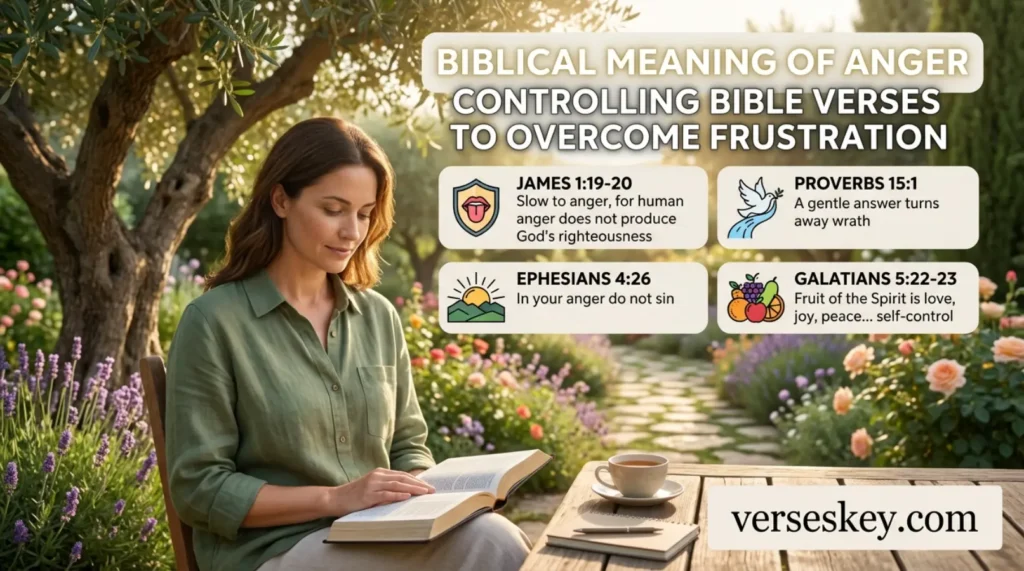
A foundational verse is James 1:19–20:
“Everyone should be quick to listen, slow to speak and slow to become angry, because human anger does not produce the righteousness that God desires.”
The New Testament word often translated as anger comes from the Greek term orgē, referring to settled wrath or strong indignation. Scripture distinguishes between righteous anger against sin and sinful anger driven by pride, revenge, or selfishness.
The biblical meaning of controlling anger is not suppressing every emotion. Instead, it is allowing God’s Spirit to shape our response. Jesus Himself showed righteous anger against injustice in the temple while never allowing sinful rage to rule His actions. His example teaches believers to respond with truth, love, and wisdom.
These Scripture references reveal that frustration becomes an opportunity for spiritual growth when believers pause, pray, and seek God’s direction. The Christian meaning of self-control reflects a transformed heart that trusts God’s justice rather than personal revenge.
Top Bible Verses That Help Control Anger and Overcome Frustration
One of the greatest gifts God has given believers is His Word. These verses offer comfort, correction, and encouragement whenever frustration begins to rise.
Proverbs 15:1
“A gentle answer turns away wrath, but a harsh word stirs up anger.”
Gentle speech often calms difficult situations before they become larger conflicts. God reminds us that kindness has the power to restore peace.
Ephesians 4:26–27
“In your anger do not sin. Do not let the sun go down while you are still angry.”
This passage encourages believers to deal with anger quickly through forgiveness, prayer, and honest communication instead of allowing bitterness to grow.
Proverbs 14:29
“Whoever is patient has great understanding, but one who is quick-tempered displays folly.”
Patience demonstrates wisdom. Taking time before responding often prevents regret and preserves relationships.
Colossians 3:12–13
“Clothe yourselves with compassion, kindness, humility, gentleness and patience. Bear with each other and forgive one another.”
God calls His people to reflect Christ’s character by choosing compassion over resentment.
Psalm 37:8
“Refrain from anger and turn from wrath; do not fret—it leads only to evil.”
This verse reminds believers that lingering anger rarely solves problems. Trusting God brings greater peace than holding onto frustration.

Spiritual Significance and Symbolism
Anger in Scripture often symbolizes an important crossroads of the heart. One path leads toward pride, resentment, and broken fellowship. The other leads toward humility, forgiveness, and spiritual maturity. The biblical symbolism of controlling anger reveals the ongoing work of God’s grace in transforming believers into Christ’s likeness.
When Christians choose patience instead of impulsive reactions, they demonstrate confidence in God’s sovereignty. Self-control becomes evidence that the Holy Spirit is producing lasting fruit within their lives. This reflects the spiritual significance of surrendering emotions rather than allowing emotions to rule decisions.
The Bible also connects peaceful responses with healthy families, stronger friendships, and faithful communities. Parents model patience for children. Husbands and wives strengthen trust through gentle communication. Church members preserve unity by extending grace to one another.
These spiritual lessons remind believers that every moment of frustration offers another opportunity to honor God through faithful obedience.
Biblical Interpretations in Dreams or Real Life
Some Christians wonder whether recurring thoughts about anger, dreams involving conflict, or repeated experiences of frustration carry spiritual meaning. The Bible encourages careful discernment rather than certainty about personal experiences.
Dreams involving anger may simply reflect emotional stress or unresolved situations. They can also serve as gentle reminders to seek God’s peace, forgiveness, and wisdom through prayer. Scripture encourages believers to test every impression against God’s Word rather than relying solely on personal feelings.
In daily life, repeated frustration may become an invitation to examine the heart. God sometimes uses challenging circumstances to develop patience, humility, perseverance, and deeper trust in Him. Difficult people and unexpected delays often become opportunities to practice Christlike character.
During prayer, believers can honestly express disappointment while asking the Holy Spirit for wisdom, peace, and renewed strength. The Christian understanding is not that every frustrating event carries hidden symbolism but that God faithfully works through every circumstance for the good of those who love Him.
Rather than seeking mystical interpretations, Christians are encouraged to remain grounded in Scripture, prayer, and wise counsel while trusting God’s loving purpose.
Practical Lessons & Faith Insights
➤Trust God’s timing even when circumstances seem unfair because His plans are always wiser than our own.
• Pray before responding during moments of frustration so your words reflect grace rather than anger.
➤Practice listening carefully before speaking since understanding often reduces unnecessary conflict.
• Forgive quickly to prevent bitterness from taking root in your heart.
• Read Scripture daily to renew your mind with God’s truth and wisdom.
➤Ask the Holy Spirit to produce self-control as part of your spiritual growth.
• Encourage others with gentle words that build peace instead of creating division.
• Develop habits of gratitude because thankful hearts often experience greater contentment and patience.
➤Remember Jesus’ example of responding with compassion even when treated unfairly.
• Build healthy relationships by choosing humility, kindness, and understanding during disagreements.
How This Biblical Meaning Applies Today
Modern life brings many opportunities for frustration. Busy schedules, financial concerns, family responsibilities, workplace pressures, and constant distractions can test anyone’s patience. Yet God’s Word remains just as relevant today as it was centuries ago.
Christians can apply these biblical insights by making prayer the first response rather than the last. Before reacting emotionally, believers can pause and ask God for wisdom. This simple practice often changes both attitudes and outcomes.
Families benefit when parents model calm communication during stressful moments. Children learn emotional maturity by watching adults respond with patience instead of anger. Marriages also grow stronger when spouses choose forgiveness over keeping records of past mistakes.
In friendships and workplaces, respectful conversations reflect Christ’s love even during disagreements. Choosing gentle words creates opportunities for understanding instead of division.
Personal spiritual growth also depends on developing daily habits that strengthen faith. Regular Bible reading, worship, prayer, and fellowship with other believers prepare the heart to respond wisely when frustration comes.
These practical applications demonstrate that biblical teaching is not merely theoretical. God’s purpose is to transform hearts so believers become peacemakers who reflect His character in every area of life.
Frequently Asked Questions (FAQ)
What do anger controlling Bible verses mean?
They teach believers to manage anger through prayer, patience, forgiveness, and dependence on God’s wisdom rather than reacting with sinful behavior.
What is the spiritual meaning of overcoming frustration?
Spiritually, overcoming frustration represents trusting God’s plan, developing self-control, and allowing the Holy Spirit to transform the heart into Christ’s likeness.
Which Bible verse is best for controlling anger?
James 1:19–20 is one of the most well-known passages because it encourages believers to be quick to listen, slow to speak, and slow to become angry.
Why is controlling anger important in Christianity?
Controlling anger protects relationships, reflects Christian character, promotes peace, and honors God’s command to love others with patience and compassion.
Can Christians feel angry?
Yes. The Bible acknowledges that anger is a normal human emotion. The important lesson is responding without sin and allowing God to guide every action.
How can prayer help overcome frustration?
Prayer brings worries before God, calms anxious hearts, provides wisdom, and reminds believers that His peace is greater than any difficult situation.
What spiritual lessons can families learn from these Bible verses?
Families learn forgiveness, respectful communication, patience, humility, and the importance of resolving conflict in ways that strengthen love and unity.
How do these Bible verses apply to everyday life?
They encourage believers to respond with kindness at home, work, church, and in every relationship while trusting God through life’s daily challenges.
Conclusion
Anger Controlling Bible Verses to Overcome Frustration reveal that God’s desire is not simply to reduce angry reactions but to transform the heart itself. Throughout Scripture, believers are invited to replace bitterness with forgiveness, impatience with endurance, and frustration with unwavering trust in the Lord.
The biblical meaning of controlling anger points toward spiritual maturity that reflects the character of Jesus Christ. Every challenge becomes another opportunity to rely on God’s strength, seek His wisdom, and demonstrate His love through peaceful responses.
As you meditate on these Scripture references, remember that lasting change comes through God’s grace working within you each day. Continue praying, studying His Word, and trusting the Holy Spirit to shape your thoughts, words, and actions. Even in life’s most frustrating moments, God remains faithful, offering peace that guards the heart and hope that never fades.

I am Grace Willow passionate about sharing the wisdom and comfort of Scripture. Through my writing, I explore faith, hope, and the timeless lessons of the Bible. I aim to bring God’s Word to life in ways that inspire and guide daily living. My verses and reflections seek to encourage, uplift, and strengthen readers’ faith. For me, writing about Scripture is a way to connect hearts to God’s love.