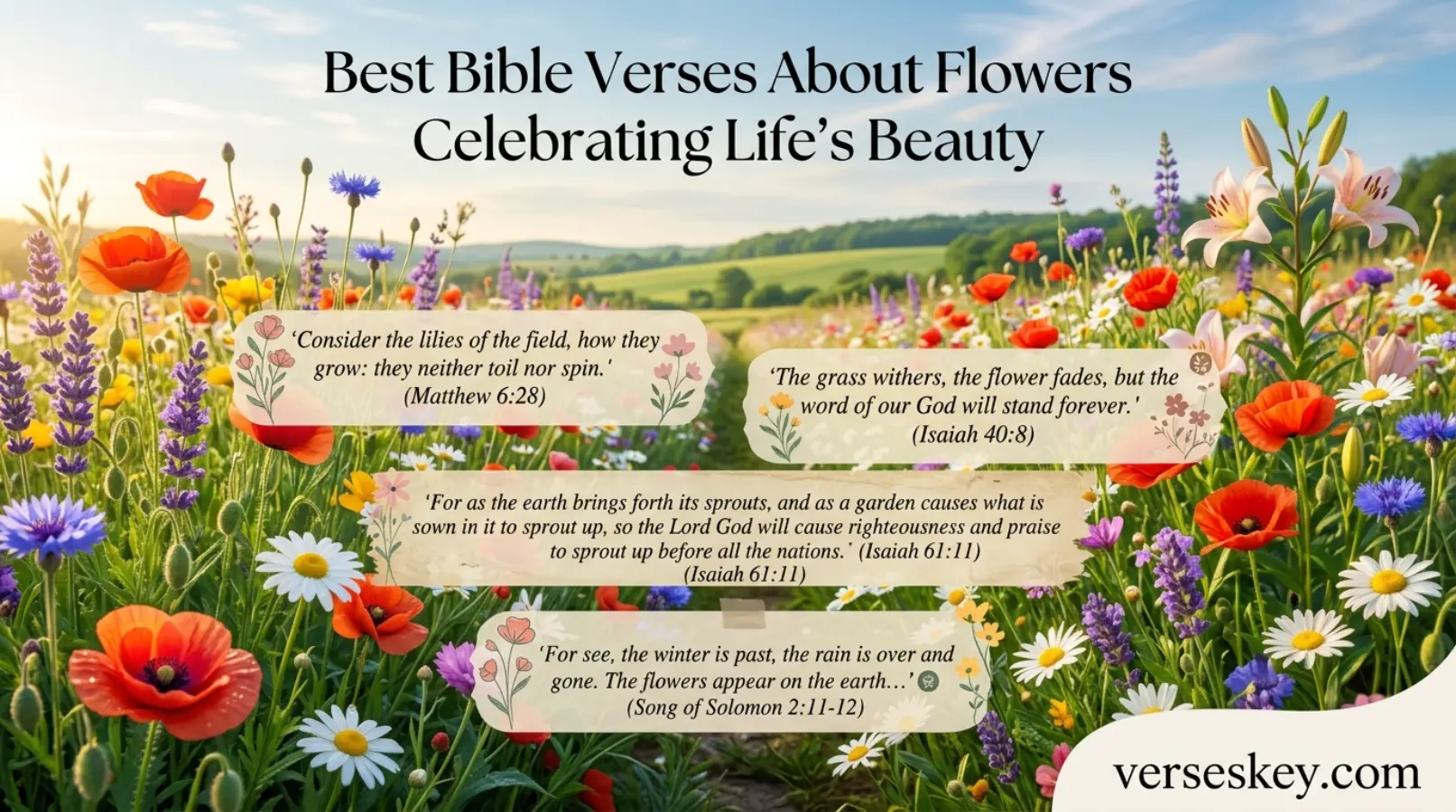
Best Bible Verses About Flowers Celebrating Life’s Beauty remind us of God’s creativity, love, and faithful care through every season. These meaningful scriptures highlight the beauty of flowers while revealing powerful spiritual lessons about faith, hope, and renewal.
Our collection features carefully selected Bible verses that inspire reflection, gratitude, and trust in God’s perfect plan. Every verse is easy to read and suitable for personal devotion, greeting cards, or encouraging messages.
Use the one-click copy option to save your favorite flower Bible verses instantly, and share inspiring scriptures with family and friends using the quick WhatsApp share button. Celebrate God’s beautiful creation and strengthen your faith with these uplifting Bible verses about flowers today.
Quick Answer:
The best Bible verses about flowers celebrating life’s beauty remind us that every bloom reflects God’s creativity, care, and faithfulness. Scripture uses flowers to teach about hope, human life, God’s provision, spiritual growth, and the lasting beauty found in a faithful relationship with Him.
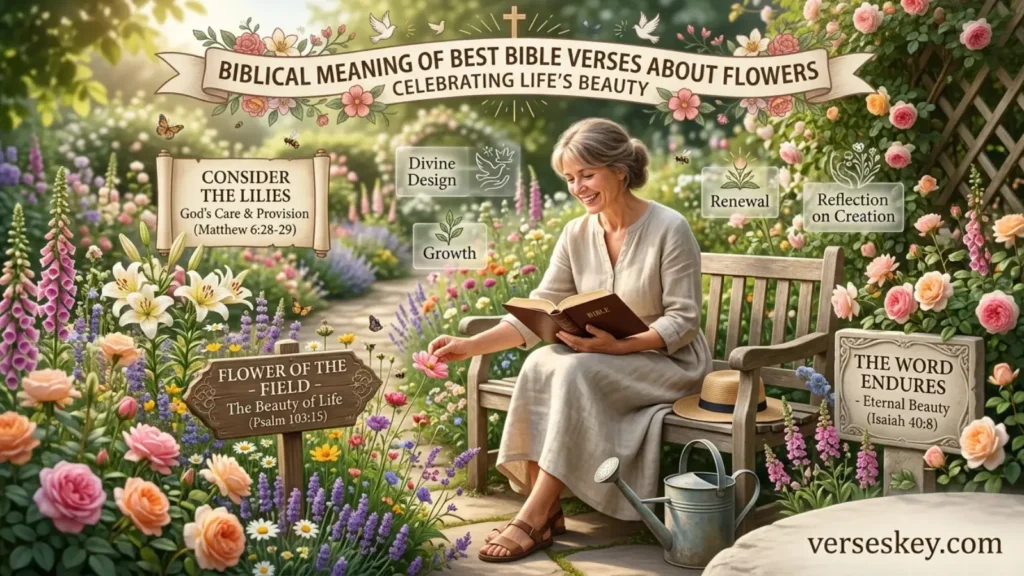
Biblical Meaning of Best Bible Verses About Flowers Celebrating Life’s Beauty
Flowers appear throughout Scripture as vivid illustrations of God’s wisdom and His relationship with humanity. While flowers themselves are not the central message of the Bible, they beautifully communicate deeper spiritual truths that continue to encourage believers today.
One of the best-known passages is found in Jesus’ Sermon on the Mount.
“Consider the lilies of the field, how they grow; they neither toil nor spin.” (Matthew 6:28)
Jesus pointed to ordinary flowers to teach extraordinary lessons about trusting God’s provision. If God clothes wildflowers with beauty that lasts only a short time, believers can confidently trust Him to care for their daily needs.
In the Old Testament, flowers often symbolize both beauty and life’s brevity.
“The grass withers, the flower fades, but the word of our God stands forever.” (Isaiah 40:8)
This powerful contrast reminds readers that earthly beauty is temporary, but God’s promises remain unchanging through every generation.
The Hebrew word often translated as “flower” includes blossoms that represent flourishing life, while the Greek New Testament continues this imagery to emphasize God’s faithful care and the temporary nature of worldly achievements.
These passages reveal several important biblical insights:
God delights in beauty because He is the Creator of beauty.
Flowers demonstrate His generosity even where no human eye may ever see them.
Their short lifespan reminds believers to invest in eternal treasures rather than temporary pleasures.
Their growth reflects God’s continual work of renewal throughout creation.
The biblical meaning of flowers ultimately points beyond nature itself. Every blossom directs attention back to the Creator whose love, wisdom, and faithfulness never fade.
Best Bible Verses About Flowers Celebrating Life’s Beauty
Matthew 6:28–30
“Consider the lilies of the field, how they grow…”
Jesus encourages His followers to replace anxiety with trust. Flowers neither worry nor strive, yet God clothes them with breathtaking beauty. This passage teaches believers to rest confidently in God’s loving care.
Isaiah 40:8
“The grass withers, the flower fades, but the word of our God stands forever.”
Human life is temporary, but God’s truth remains eternal. This verse reminds Christians to build their lives on God’s unchanging promises instead of temporary achievements.
Song of Solomon 2:1–2
“I am the rose of Sharon, and the lily of the valleys.”
These poetic words celebrate beauty, love, and devotion. Many Christians also see deeper spiritual symbolism pointing toward God’s loving relationship with His people.
Hosea 14:5–6
“He shall blossom like the lily.”
God promises restoration for His people after repentance. The image of blooming flowers reflects spiritual renewal, healing, and abundant life through God’s mercy.
James 1:10–11
“Like a flower of the field he will pass away.”
James reminds believers that wealth and earthly success quickly disappear. Humility and faithful obedience hold lasting value before God.
Psalm 103:15–17
“As for man, his days are like grass; he flourishes like a flower of the field.”
Life is fragile, but God’s steadfast love lasts forever. This comforting passage encourages believers to focus on God’s eternal faithfulness.
1 Peter 1:24–25
“All flesh is like grass and all its glory like the flower of grass.”
Peter echoes Isaiah’s message by reminding Christians that earthly glory fades while God’s Word remains forever trustworthy.
Luke 12:27
“Consider the lilies, how they grow.”
Jesus again uses flowers to encourage peace instead of fear. His lesson continues to comfort believers facing uncertainty today.
Spiritual Significance and Symbolism
Flowers hold rich spiritual significance throughout biblical history because they naturally reflect many qualities of God’s character.
Flowers symbolize divine beauty.
Every flower reveals the creativity of the One who designed the heavens and the earth. Their colors, patterns, and fragrance remind believers that God values beauty alongside purpose.
Flowers symbolize God’s provision.
Jesus intentionally chose lilies to illustrate how faithfully the Heavenly Father provides for His creation. Their existence encourages believers to trust God’s daily care.
Flowers symbolize hope.
After harsh winters come fresh blossoms. Likewise, God brings renewal after seasons of hardship, grief, disappointment, or spiritual dryness.
Flowers symbolize humility.
Many of the most beautiful flowers grow quietly without seeking recognition. Christians are called to serve with the same humble spirit, allowing God alone to receive glory.
Flowers symbolize spiritual growth.
Healthy flowers require light, water, and nourishment. Likewise, believers grow through prayer, Scripture, worship, and faithful obedience to God.
Flowers symbolize resurrection.
Spring blossoms have long reminded Christians of new life through Jesus Christ. Just as flowers emerge after dormant seasons, believers experience new life through God’s saving grace.
Flowers symbolize God’s love.
A single flower demonstrates thoughtful design beyond human imagination. Its beauty reminds believers that God’s love is intentional, personal, and abundant.
These biblical symbols continue encouraging Christians to see everyday creation as an invitation to worship the Creator.
Biblical Interpretations in Dreams or Real Life
Many Christians wonder whether flowers appearing in dreams or meaningful life experiences carry spiritual significance. The Bible encourages wisdom, prayer, and discernment rather than assuming every experience carries a direct message from God.
When flowers appear during dreams, they may gently remind believers of God’s promises, His care, or His ongoing work of renewal. Dreams should never replace Scripture as the foundation of faith, but they may encourage personal reflection when they align with biblical truth.
Fresh blooming flowers may remind believers of spiritual growth, answered prayer, fresh beginnings, or God’s continuing faithfulness.
A field filled with flowers may encourage gratitude for God’s abundant blessings and His generous provision.
Receiving flowers may serve as a reminder of God’s love, comfort during difficult seasons, or encouragement through fellow believers.
Seeing flowers during prayer or quiet reflection may inspire thanksgiving for God’s beauty and His presence in daily life.
Wilted flowers may encourage believers to examine areas needing spiritual renewal, repentance, or renewed dependence upon God rather than leading to fear or discouragement.
Flowers encountered during everyday life often invite believers to pause, appreciate God’s creation, and remember His constant presence.
Christian interpretation always begins with Scripture, prayer, wise counsel, and humble dependence on God’s Spirit rather than personal speculation.
Practical Lessons & Faith Insights
⋆Trust God’s provision because He faithfully cares for every detail of creation, including your daily needs.
• Appreciate God’s beauty by slowing down to notice His creativity throughout the natural world.
• Remember life’s brevity by investing your time in eternal priorities instead of temporary achievements.
⋆Stay faithful during difficult seasons because God brings new growth after times of waiting.
• Pray consistently so your relationship with God continues growing like a healthy, flourishing garden.
• Read Scripture daily because God’s Word remains forever while earthly things pass away.
⋆ Practice humility by serving others quietly without seeking recognition or praise.
• Encourage others with kindness because gentle words often bloom into lasting hope.
• Share God’s love through practical acts of compassion that reflect Christ’s heart.
⋆Celebrate God’s faithfulness by thanking Him for both ordinary blessings and extraordinary miracles.
How This Biblical Meaning Applies Today
Modern life often moves quickly, leaving little time to appreciate God’s creation. The Bible’s teaching about flowers invites believers to slow down and recognize God’s fingerprints throughout everyday life.
Families can use flowers as opportunities to teach children about God’s creativity, His love, and His faithful provision. Simple walks outdoors become meaningful conversations about faith when viewed through the lens of Scripture.
Church communities can remember that spiritual growth happens gradually. Just as flowers bloom according to God’s timing, believers mature through consistent discipleship, patience, and grace.
Personal spiritual growth also follows this pattern. Some seasons feel vibrant and fruitful, while others involve quiet waiting. Both seasons remain valuable because God continues working even when visible growth seems slow.
Relationships benefit from the flower imagery found throughout Scripture. Kindness, forgiveness, encouragement, and humility help friendships and families flourish just as healthy soil helps flowers bloom.
During anxious moments, Jesus’ teaching about lilies offers lasting comfort. Instead of allowing worry to dominate our thoughts, believers are invited to trust the Father’s loving care one day at a time.
Flowers also remind Christians that outward beauty eventually fades, but godly character continues producing eternal fruit. As believers grow in love, patience, peace, kindness, and faithfulness, they display a beauty that reflects Christ Himself.
Every flower becomes an invitation to worship the Creator rather than merely admiring creation.
Frequently Asked Questions (FAQ)
What do flowers symbolize in the Bible?
Flowers symbolize God’s beauty, His provision, the temporary nature of earthly life, hope, renewal, humility, and spiritual growth.
What is the spiritual meaning of flowers according to Scripture?
The spiritual meaning of flowers points to God’s faithful care, His creative power, His promises of renewal, and the beauty of a life rooted in faith.
Which Bible verse talks about flowers the most?
Matthew 6:28–30 is among the best-known passages. Jesus uses lilies to teach believers not to worry but to trust God’s loving provision.
Why did Jesus use flowers as an example?
Jesus used flowers because they clearly demonstrate God’s care for creation. Their beauty reveals that God faithfully provides for even the smallest details of life.
What can Christians learn from flowers?
Christians learn to trust God’s timing, appreciate His creation, remain humble, pursue spiritual growth, and focus on eternal truths instead of temporary success.
Do flowers represent resurrection in Christianity?
Although not every flower directly symbolizes resurrection, blooming flowers often remind Christians of new life through Jesus Christ and God’s power to bring hope after difficult seasons.
Are flowers mentioned often in the Bible?
Yes. Flowers appear throughout both the Old and New Testaments as illustrations of beauty, God’s provision, life’s brevity, restoration, worship, and spiritual truth.
How can Bible verses about flowers strengthen faith?
These verses encourage believers to trust God’s care, recognize His presence in creation, remember His eternal promises, and grow in gratitude each day.
Conclusion
The best Bible verses about flowers celebrating life’s beauty reveal far more than colorful blossoms. They point to God’s loving heart, His endless creativity, His faithful provision, and His invitation to trust Him completely. Every flower quietly teaches that beauty is found not only in appearance but also in a life rooted in God’s truth.
As you reflect on these Scriptures, allow every blooming flower to remind you of God’s constant presence. Let the lilies teach you to release worry. Let fading blossoms remind you to treasure eternal things. And Let every season of growth strengthen your confidence that God continues working in your life, even when you cannot yet see the full harvest.
May these Bible verses inspire you to walk each day with gratitude, hope, and unwavering faith, knowing that the same Creator who clothes the flowers with beauty also lovingly cares for you and fulfills His perfect purpose in every season of life.

I am Grace Willow passionate about sharing the wisdom and comfort of Scripture. Through my writing, I explore faith, hope, and the timeless lessons of the Bible. I aim to bring God’s Word to life in ways that inspire and guide daily living. My verses and reflections seek to encourage, uplift, and strengthen readers’ faith. For me, writing about Scripture is a way to connect hearts to God’s love.