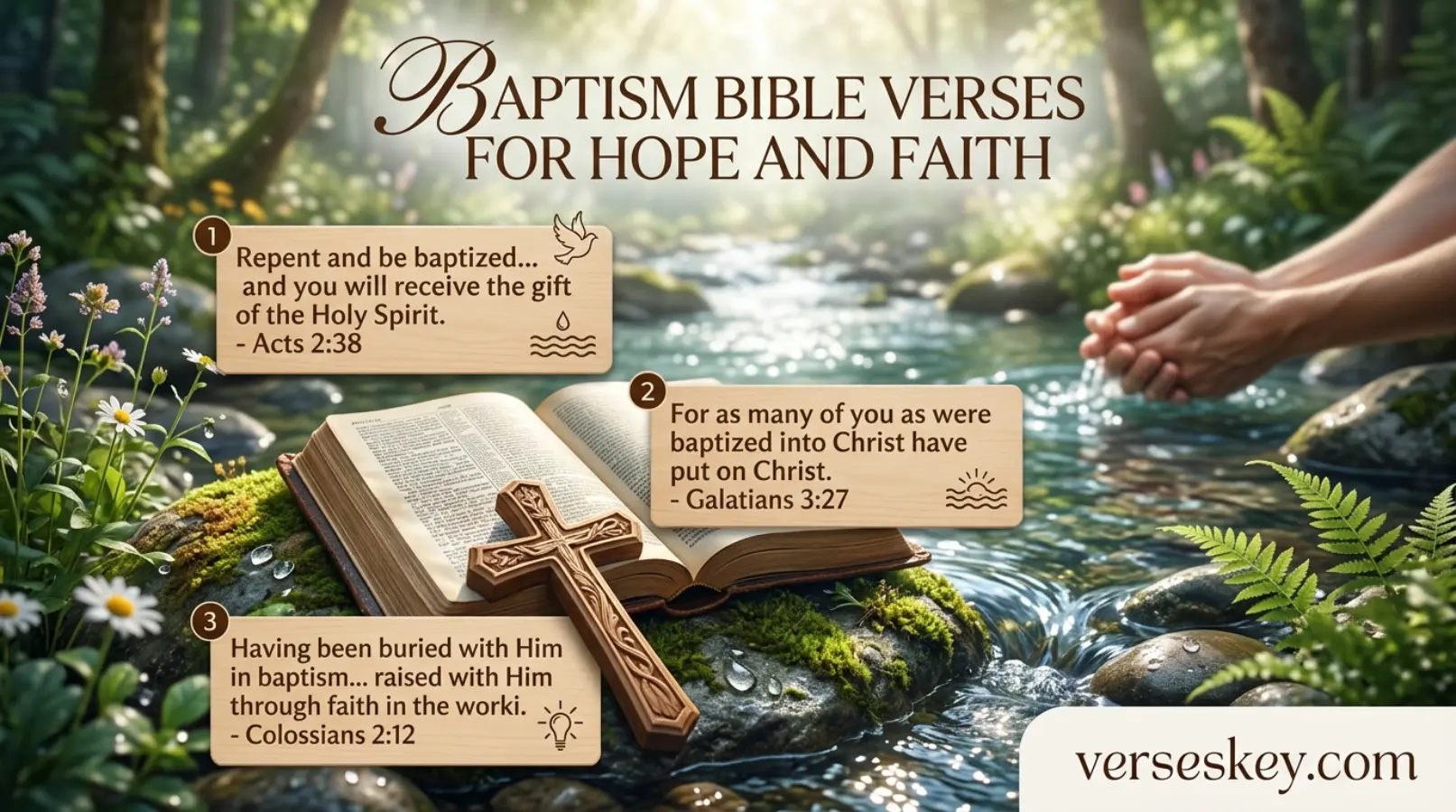
Baptism Bible Verses for Hope and Faith offer meaningful reminders of new beginnings, God’s grace, and a growing relationship with Christ. These uplifting Scriptures can encourage your heart as you reflect on baptism, faith, spiritual renewal, and God’s promises.
You will discover inspiring verses that bring hope, strengthen faith, and celebrate the beautiful meaning of baptism. Let these powerful Bible verses encourage you to walk confidently with God and embrace your new life in Christ.
Our easy-to-use copy option helps you save your favorite verses instantly for personal reflection or sharing. Use the quick WhatsApp share button to send these encouraging Baptism Bible Verses for Hope and Faith to friends and loved ones. Celebrate this meaningful step of faith by sharing a Scripture that inspires hope and encourages a closer walk with Christ.
Quick Answer
Baptism Bible Verses show that baptism represents repentance, new life, faith, obedience, and union with Christ. Scriptures such as Romans 6:3–4, Matthew 28:19, and Acts 2:38 connect baptism with following Jesus, receiving forgiveness, and living a transformed life through faith.
Biblical Meaning of Baptism Bible Verses for Hope and Faith
The word baptism comes from the Greek baptisma, related to baptizō, a word associated with dipping, immersing, or placing into water. The New Testament uses this language within the developing ministry of John the Baptist and, later, the mission of the early Christian church.
John’s baptism appears prominently in the Gospels. Mark describes John as preaching “a baptism of repentance for the forgiveness of sins” (Mark 1:4). His ministry prepared people to turn from sin and prepare their hearts for the coming Messiah.
Baptism therefore carries several connected biblical ideas:
- Repentance and turning toward God
- Obedience to Jesus Christ
- Identification with Christ
- Newness of life
- Public expression of faith
- Participation in the Christian community
Romans 6:3–4 gives one of the deepest biblical interpretations of baptism:
“All of us who have been baptized into Christ Jesus were baptized into his death.”
Paul continues by connecting baptism with being raised to new life. His teaching shows that baptism symbolizes a profound spiritual reality: the believer’s old life of sin no longer defines their identity, because life in Christ brings a new direction.
This does not mean Christians become instantly perfect after baptism. Scripture consistently presents spiritual growth as an ongoing process. Baptism points to a new relationship with Christ and a life increasingly shaped by His teachings.
The book of Acts also connects baptism with repentance and faith. After Peter preached at Pentecost, he called the listeners to repent and be baptized in the name of Jesus Christ (Acts 2:38). The response demonstrates how seriously the early church regarded baptism as part of responding to the gospel.
The deeper faith lesson is simple but powerful: God calls believers not only to hear the message of Christ but also to respond to Him with faith, repentance, and obedience.
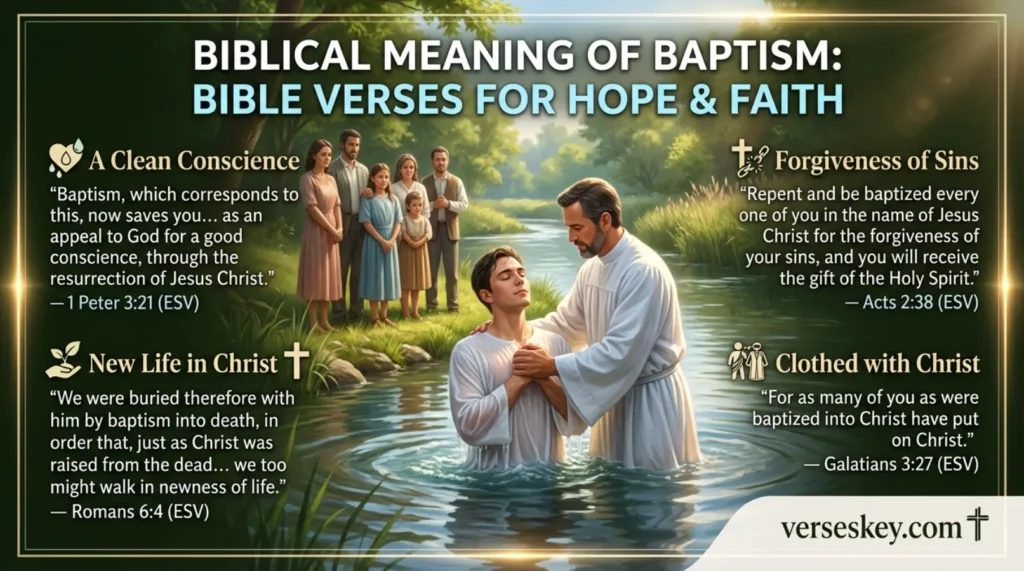
Spiritual Significance and Symbolism
Baptism carries several layers of spiritual significance throughout the New Testament. Water provides a visible picture that helps believers understand invisible spiritual truths.
One important symbol is cleansing. Water naturally communicates washing, and Scripture frequently uses cleansing imagery when describing God’s forgiveness and restoration. Baptism does not make God’s grace unnecessary; instead, it points believers toward the cleansing and renewal found through Christ.
Another important symbol is death and resurrection. Romans 6 connects baptism with Christ’s death and resurrection. Entering the water can picture leaving the old life behind, while rising from the water can picture beginning a renewed life with Christ.
Baptism also symbolizes identification. A baptized believer publicly identifies with Jesus and His people. This declaration can encourage a person to live with greater awareness of Christian responsibility and purpose.
The spiritual lessons extend into everyday character:
- Faith: Baptism encourages believers to trust Christ rather than depend on their own strength.
- Obedience: Jesus commanded His disciples to baptize, making obedience an important part of Christian discipleship.
- Renewal: The imagery of new life encourages believers to pursue spiritual growth.
- Humility: Baptism reminds Christians that salvation rests on God’s grace rather than human achievement.
- Community: Baptism publicly connects believers with the body of Christ.
These themes can influence families and future generations. Parents who take their faith seriously can demonstrate to children that following Jesus involves both belief and action. Churches can use baptism as an opportunity to teach the gospel, celebrate transformed lives, and encourage new believers.
At a personal level, baptism can become a lasting reminder of a believer’s commitment to Christ. When difficult seasons come, remembering that commitment can encourage perseverance and renewed faith.
Biblical Interpretations in Dreams or Real Life
People sometimes encounter baptism in dreams, prayer, personal reflection, conversations, or significant moments in their Christian journey. Scripture gives Christians principles for reflection, but it does not provide a universal interpretation for every dream involving water or baptism.
A dream about baptism should not automatically be treated as a prophecy or direct message from God. Christian discernment should remain grounded in Scripture, prayer, wisdom, and the broader teaching of the Bible.
A baptism-related dream may gently prompt reflection about spiritual renewal, repentance, commitment, or a desire to grow closer to Christ. Someone thinking seriously about following Jesus may naturally connect baptism with that decision.
Positive spiritual reflections may include:
- A renewed desire to follow Christ faithfully
- A reminder to examine one’s spiritual priorities
- Encouragement to leave harmful habits behind
- A desire for forgiveness and restoration
- A renewed commitment to prayer and Scripture
- A reminder of God’s grace during a difficult season
The biblical approach is to avoid assigning mystical certainty to symbols. Scripture remains the primary foundation for Christian belief.
If baptism appears during prayer or personal reflection, a believer can ask thoughtful questions: Am I trusting Christ? Am I growing in obedience? Have I allowed past failures to weaken my hope? Am I encouraging others in their faith?
Such reflection can turn a symbolic experience into a constructive spiritual exercise without claiming that every dream has a supernatural explanation.
Practical Lessons & Faith Insights
Baptism Bible Verses for Hope and Faith provide practical lessons that reach far beyond the baptismal service. They encourage believers to live consistently with the faith they profess.
- Trust God: Baptism points believers toward confidence in God’s grace and promises. Faith grows when Christians learn to depend on God during uncertainty.
- Stay faithful: Following Christ is a lifelong journey. Baptism can remind believers that their commitment to Jesus should continue through both joyful and difficult seasons.
- Pray consistently: Prayer keeps the heart focused on God. Regular prayer helps believers seek wisdom, confess failures, express gratitude, and bring their concerns before the Lord.
- Study Scripture: Biblical understanding grows through regular engagement with God’s Word. Reading passages about baptism can help Christians understand repentance, grace, discipleship, and new life.
- Practice repentance: Christian growth includes recognizing sin and turning back toward God. Repentance is not merely feeling guilty; it involves a sincere change of direction.
- Encourage others: A believer’s faith can strengthen family members, friends, and church communities. Sharing biblical encouragement can help others remain hopeful.
- Live with purpose: Baptism points toward a life devoted to Christ. Daily choices should increasingly reflect love, patience, integrity, forgiveness, and service.
- Remember new life: Romans 6 encourages Christians to live differently because of their union with Christ. Past failures do not have to determine the direction of a believer’s future.
These lessons make baptism relevant long after the ceremony ends. The outward act can serve as a continuing reminder of an inward commitment to follow Jesus.
How This Biblical Meaning Applies Today
Modern Christians can understand baptism through the larger biblical story of redemption. Jesus calls people to discipleship, and baptism serves as a visible expression of belonging to Him.
In family life, baptism can open meaningful conversations about faith. Parents can explain biblical themes such as forgiveness, obedience, grace, and new life in language children can understand. Families can also pray together and read relevant Scriptures as they celebrate a baptism.
In personal spiritual growth, baptism encourages believers to examine the direction of their lives. The question is not simply, “Was I baptized?” but also, “Am I continuing to follow Christ?”
Relationships can also change when Christians apply the principles represented by baptism. A renewed life should become visible through forgiveness, patience, honesty, compassion, and love. Faith becomes meaningful when it shapes the way people treat one another.
Personal development also benefits from the biblical message of renewal. Christians may carry regrets, disappointments, or memories of past mistakes. The symbolism of baptism points toward the hope that life in Christ is not controlled by yesterday’s failures.
Practical steps can include:
- Set aside regular time for prayer.
- Read the Gospels to understand Jesus’ teachings.
- Study Romans 6 and Acts 2 for deeper baptism insights.
- Talk with a trusted pastor or mature Christian about biblical questions.
- Practice forgiveness in difficult relationships.
- Look for opportunities to serve others.
- Continue growing after baptism instead of viewing it as the end of spiritual development.
Baptism does not remove every hardship. Instead, its biblical symbolism points believers toward Christ in the middle of those hardships. The hope is found not in the water itself but in the Savior to whom baptism points.
Key Bible Verses About Baptism, Hope, and Faith
Several passages provide especially helpful Scripture references for understanding baptism and its spiritual significance.
Matthew 28:19 teaches Jesus’ command to make disciples and baptize them in the name of the Father, Son, and Holy Spirit. This passage connects baptism with Christian discipleship and the mission of the church.
Mark 1:4 describes John’s baptism as a baptism of repentance connected with forgiveness. It highlights the importance of turning toward God.
Acts 2:38 records Peter’s call to repentance and baptism following his Pentecost sermon. The passage shows the early church’s emphasis on responding to the gospel.
Romans 6:3–4 provides one of the strongest symbolic explanations of baptism. Paul connects baptism with Christ’s death and resurrection and the believer’s newness of life.
Galatians 3:27 says that those baptized into Christ have “clothed yourselves with Christ.” This beautiful image emphasizes identification with Jesus and a new spiritual identity.
Colossians 2:12 connects baptism with being buried and raised with Christ through faith in God’s power. The passage emphasizes faith rather than treating the physical ceremony as an isolated act.
1 Peter 3:21 discusses baptism in connection with salvation while immediately directing attention toward a clear conscience before God through the resurrection of Jesus Christ. This passage should be understood alongside the wider New Testament teaching about faith, grace, repentance, and Christ’s saving work.
Together, these Scriptures provide a balanced biblical picture. Baptism is important, meaningful, and commanded by Christ, yet its significance cannot be separated from genuine faith and the saving work of Jesus.

Baptism and the Hope of New Life
One of the most encouraging themes connected with baptism is new life. Christianity does not merely tell people to become better versions of themselves. The gospel announces that God offers reconciliation and new life through Jesus Christ.
Romans 6 uses the resurrection of Christ as the foundation for this hope. Jesus died and rose again, and believers are called to live in the reality of that victory.
This message can speak deeply to people carrying regret. A person may look back at choices they wish they could change. Scripture does not encourage believers to pretend those failures never happened. Instead, it points them toward repentance, forgiveness, grace, and transformation.
Baptism can therefore become a powerful reminder that the Christian life moves forward. The past matters, but it does not have to become a person’s final identity.
The hope represented by baptism also reaches difficult seasons. Christians may experience grief, disappointment, uncertainty, or spiritual dryness. The symbolism of dying and rising with Christ can remind them that God remains faithful even when circumstances change.
This hope is not based on positive thinking. It rests on the biblical message of Christ’s death and resurrection.
Baptism as an Expression of Faith and Obedience
Faith and obedience work together throughout the biblical teaching on baptism. Jesus’ command in Matthew 28 places baptism within the process of making disciples.
A person who follows Christ is called to trust Him and increasingly live according to His teachings. Baptism provides a public expression of that commitment.
At the same time, Christians should avoid reducing baptism to an outward performance. The New Testament repeatedly emphasizes the heart, faith, repentance, and God’s grace.
This balance protects baptism from two extremes. One extreme treats baptism as an empty ceremony with little spiritual meaning. The other treats the physical act as something that can replace genuine faith and transformed living.
Biblical interpretation calls Christians to recognize both the importance of the act and the greater reality to which it points.
Baptism says, in effect, that a believer desires to identify with Christ. It marks a meaningful step of obedience while directing attention toward Jesus rather than toward the person being baptized.
For this reason, baptism can encourage humility. Christians do not baptize themselves into spiritual perfection. They begin or publicly affirm a journey of discipleship that requires God’s grace every day.
What Baptism Teaches About Christian Identity
Christian identity is rooted in Christ. Baptism provides a visible expression of that identity and reminds believers that their lives belong to God.
Galatians 3:27 uses the image of being “clothed with Christ.” The picture is powerful because clothing is visible to others. In a similar way, Christian character should become increasingly visible through daily behavior.
A baptized believer is still learning, growing, and sometimes failing. Yet the direction of life should increasingly reflect Christ.
This understanding can transform ordinary relationships. A Christian may choose patience instead of anger, forgiveness instead of bitterness, honesty instead of deception, and service instead of selfishness.
Baptism therefore points beyond a single day. Its meaning continues through everyday choices.
The spiritual significance becomes especially clear during moments of temptation or discouragement. A believer can remember the commitment represented by baptism and ask, “Does this choice reflect the new life I have been called to live?”
That question does not produce condemnation. It can encourage faithful self-examination and renewed dependence on God.
Frequently Asked Questions (FAQ)
What does Baptism Bible Verses for Hope and Faith mean in the Bible?
Baptism Bible Verses for Hope and Faith point to themes of repentance, faith, obedience, new life, identification with Christ, and spiritual renewal. Romans 6:3–4 gives especially important insight into baptism’s symbolism.
What is the spiritual meaning of baptism?
Baptism spiritually represents identification with Christ, particularly His death and resurrection. Romans 6 connects baptism with leaving an old life behind and walking in newness of life.
Why is baptism important for Christians?
Baptism is important because Jesus commanded His disciples to baptize believers. Matthew 28:19 places baptism within the mission of making disciples and teaching people to follow Christ.
What Bible verse talks about baptism and new life?
Romans 6:3–4 connects baptism with Christ’s death and resurrection and says believers should “walk in newness of life.” It is one of the clearest passages about baptism’s symbolic meaning.
Does baptism represent forgiveness?
Scripture connects baptism with repentance and forgiveness, particularly in Acts 2:38 and Mark 1:4. Christians should understand these passages within the wider New Testament teaching about God’s grace, faith, repentance, and salvation through Christ.
What can Christians learn from baptism?
Christians can learn lessons about faith, obedience, repentance, humility, renewal, and commitment to Jesus. Baptism also encourages believers to live consistently with their identity in Christ.
Can baptism symbolize a fresh start?
Yes. Romans 6:4 connects baptism with newness of life. Its symbolism can remind believers that life in Christ involves leaving sinful patterns behind and pursuing a renewed way of living.
What should I read in the Bible about baptism?
Helpful passages include Matthew 28:19–20, Mark 1:4–11, Acts 2:38–41, Romans 6:3–4, Galatians 3:27, Colossians 2:12, and 1 Peter 3:21. Reading these passages together gives a broader biblical understanding of baptism.
Conclusion
Baptism Bible Verses for Hope and Faith reveal a meaningful biblical picture of repentance, obedience, identification with Christ, and new life. From John’s ministry to Jesus’ command and Paul’s teaching in Romans, Scripture consistently connects baptism with a deeper response to God’s work through Christ.
The spiritual significance of baptism reaches far beyond the water. It points believers toward the death and resurrection of Jesus, encourages faithful discipleship, and reminds Christians that their identity rests in Christ.
For someone preparing for baptism, these Scriptures can provide encouragement and understanding. For someone baptized many years ago, they can serve as a reminder to continue walking faithfully with Jesus.
The most beautiful lesson is the message of new life. God calls His people to leave the old ways behind, grow in faith, love others, and live with hope.
May these Baptism Bible Verses for Hope and Faith encourage you to trust God’s grace, follow Christ with confidence, and remember that the journey of faith continues long after the water has dried. The God who calls you to new life is also faithful to guide you through every step ahead.

I am Grace Willow passionate about sharing the wisdom and comfort of Scripture. Through my writing, I explore faith, hope, and the timeless lessons of the Bible. I aim to bring God’s Word to life in ways that inspire and guide daily living. My verses and reflections seek to encourage, uplift, and strengthen readers’ faith. For me, writing about Scripture is a way to connect hearts to God’s love.