
Blessing Bible Verses to Inspire Faith and Gratitude can fill your heart with hope, peace, and thankfulness. These uplifting Scriptures remind us of God’s goodness, faithful promises, and endless blessings, offering comfort and encouragement in every season of life.
Find meaningful verses for prayer, daily encouragement, gratitude, and moments when you need renewed faith. Let these Bible verses strengthen your trust in God and inspire a grateful heart each day.
Use our easy-to-copy option to save your favorite verse instantly. You can also use the quick share button for WhatsApp to spread encouragement with family and friends.
Quick Answer:
Blessing Bible verses remind Christians that every good gift comes from God and that His presence sustains His people through every season. Scriptures about blessing encourage gratitude, faithful living, prayer, generosity, and trust in God’s promises. They also point believers toward becoming a blessing to their families, communities, and others.
Biblical Meaning of Blessing Bible Verses to Inspire Faith and Gratitude
The biblical idea of blessing appears very early in Scripture. In Genesis 1:22, God blesses the creatures He created, and Genesis 1:28 describes God blessing humanity. The Hebrew word commonly associated with blessing is barak, which carries the idea of blessing, kneeling, or expressing praise. In Scripture, blessing can describe God’s gracious favor as well as the human response of honoring Him.
One of the most recognizable biblical blessings is found in Numbers 6:24–26:
“The LORD bless thee, and keep thee.”
This priestly blessing was given to Aaron and his sons for Israel. It emphasized God’s protection, gracious presence, favor, and peace. The blessing was not simply a wish for wealth. It pointed God’s people toward dependence on Him and confidence in His covenant care.
Biblical interpretation therefore shows that blessing is deeply relational. God’s blessing calls people to trust Him, obey His Word, cultivate gratitude, and use His gifts responsibly.
The New Testament expands this understanding through Christ. Jesus teaches that true blessedness is connected with spiritual realities such as humility, mercy, purity of heart, righteousness, and dependence upon God.
The deeper faith lesson is clear: a biblical blessing is ultimately about life under God’s gracious care. It encourages believers to receive God’s gifts with thanksgiving and to become channels of goodness toward others.

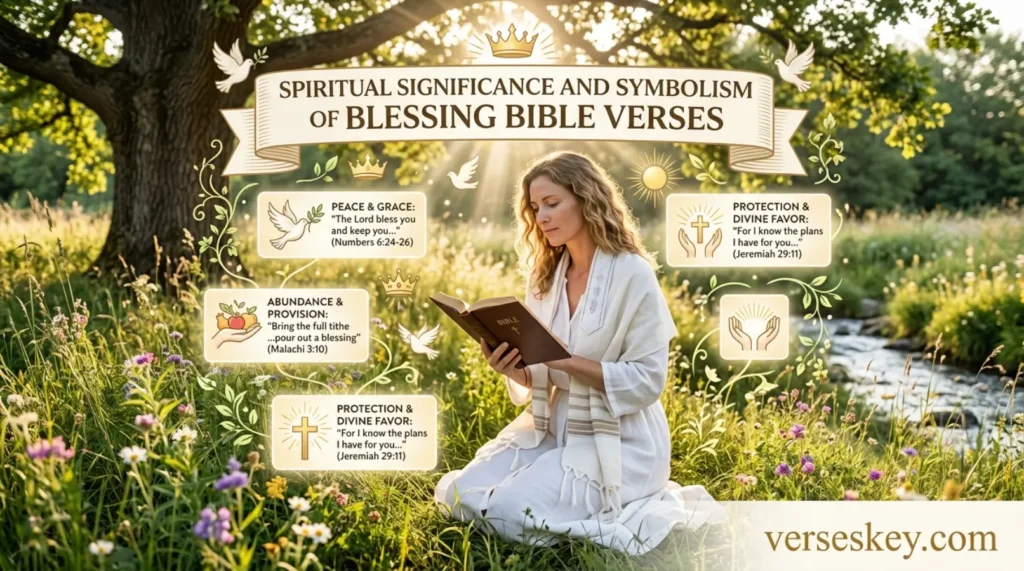
Spiritual Significance and Symbolism of Blessing Bible Verses
Blessing carries rich spiritual symbolism throughout Scripture. It can represent God’s presence, covenant faithfulness, protection, fruitfulness, peace, and spiritual growth. Biblical blessings also remind believers that everything ultimately depends upon God’s generosity rather than human strength alone.
A blessing may appear through something obvious, such as provision or answered prayer. At other times, it may be found in wisdom gained through hardship, reconciliation within a family, strength during grief, or peace during uncertainty.
Faith changes how believers recognize these moments. Instead of measuring God’s goodness only by circumstances, Christians can learn to see His faithfulness through Scripture, prayer, relationships, and daily provision.
Blessing also has a generational dimension. Parents can teach children gratitude, prayer, kindness, integrity, and dependence on God. In this way, spiritual blessings can influence families far beyond one moment.
Biblical symbolism also points toward responsibility. God blesses Abraham so that he will become a blessing to others (Genesis 12:2). This principle challenges Christians to move beyond simply asking, “What can God give me?” and consider, “How can God use what He has given me?”
The spiritual significance of blessing therefore includes both receiving and giving. God’s goodness becomes an invitation to live generously, encourage faithfully, forgive sincerely, and serve humbly.
Biblical Interpretations in Dreams or Real Life
Seeing themes of blessing during prayer, dreams, worship, or everyday reflection can feel deeply encouraging. Scripture provides a safe foundation for interpreting such experiences: believers should test impressions against God’s Word rather than treating every dream or unusual experience as a direct message from God.
A dream involving abundance, light, family, harvest, water, or joyful celebration may personally remind someone of God’s provision or faithfulness. Still, the Bible does not teach that every symbol has one universal prophetic meaning. Christian discernment should remain grounded in Scripture, prayer, wisdom, and humility.
In daily life, repeatedly encountering a meaningful Bible verse about blessing can become an opportunity to pause and give thanks. A difficult season may also reveal blessings that were previously overlooked, such as supportive relationships, spiritual maturity, renewed courage, or a deeper prayer life.
The safest biblical interpretation is not to chase signs but to seek God Himself. Psalm 119:105 describes God’s Word as a lamp for the believer’s path. Scripture gives believers a reliable foundation for understanding God’s character and responding faithfully to life’s circumstances.
A blessing-related dream or reflection can therefore serve as a gentle reminder to pray, practice gratitude, examine one’s priorities, and trust God’s wisdom.
Practical Lessons & Faith Insights
Blessing Bible verses become especially meaningful when they shape everyday choices rather than remaining words on a page.
- Trust God in daily decisions: Ask for wisdom before making important choices and submit your plans to God’s direction.
- Stay faithful in quiet seasons: Remember that God’s presence is not limited to seasons of visible success.
- Pray consistently with your family: Use short Scripture prayers at meals, bedtime, or during family conversations.
- Build habits of daily devotion: Read a small portion of Scripture regularly and reflect on what it teaches about God’s character.
- Practice gratitude intentionally: Name specific blessings instead of using general expressions of thankfulness.
- Encourage someone who feels discouraged: Share a relevant Scripture and offer sincere words of hope.
- Serve others with what you have: Time, skills, kindness, resources, and attention can all become ways of blessing people.
- Guard against entitlement: Remember that biblical blessing produces humility and gratitude rather than pride.
- Give generously: Let God’s provision inspire responsible generosity toward people who need encouragement or practical help.
- Remember God’s faithfulness: Keep a written record of answered prayers and moments when God provided strength or wisdom.
How This Biblical Meaning Applies Today
Modern life often measures blessing through income, possessions, achievements, popularity, or comfort. Scripture offers a deeper perspective. Material provision can certainly be a gift from God, but biblical blessing reaches much further into character, relationships, spiritual maturity, peace, wisdom, and faithful obedience.
For personal growth, blessing Bible verses encourage Christians to develop gratitude instead of constant comparison. A thankful person can appreciate today’s provision without losing hope for tomorrow.
In marriage and family life, these Scriptures can encourage spouses and parents to speak words of blessing rather than criticism. Praying together, forgiving quickly, expressing appreciation, and teaching children biblical values can strengthen a household.
Relationships also become healthier when believers recognize that they are called to bless others. Kindness, patience, generosity, honesty, and compassion reflect God’s character in practical ways.
Spiritual maturity involves learning that God’s blessing does not mean a life without trials. Biblical figures such as Joseph, David, Paul, and many others experienced hardship while remaining within God’s purposes. Their stories demonstrate that God’s faithfulness can continue through circumstances that do not look outwardly successful.
Today, these verses invite Christians to measure blessing through God’s presence and faithfulness rather than through temporary circumstances. They encourage a life that receives gratefully, trusts patiently, gives generously, and points others toward God.
Frequently Asked Questions (FAQ)
What do blessing Bible verses mean in the Bible?
Blessing Bible verses describe God’s favor, protection, provision, peace, spiritual care, and purposes for His people. They also teach believers to respond with gratitude, obedience, worship, and generosity.
What is the spiritual meaning of blessing?
The spiritual meaning of blessing involves living under God’s gracious care and recognizing His goodness. Biblical blessing can include material provision, but it also includes peace, wisdom, spiritual growth, relationships, and God’s presence.
Why are blessing Bible verses important?
Blessing Bible verses are important because they remind Christians of God’s faithfulness. They can strengthen faith during difficult seasons and cultivate gratitude during times of abundance.
What Bible verse talks about blessing?
Numbers 6:24–26 contains one of the Bible’s most well-known blessings: “The LORD bless thee, and keep thee.” The passage highlights God’s protection, grace, and peace.
Does biblical blessing always mean financial prosperity?
No. Scripture does not define blessing exclusively through money or possessions. Biblical blessing includes spiritual flourishing, God’s presence, wisdom, peace, relationships, provision, and faithful living.
How can I use blessing Bible verses in prayer?
Choose a verse that reflects your current situation, read it slowly, thank God for His faithfulness, and ask Him to help you live according to its truth. You can also pray the verse over your family.
How can I become a blessing to others?
You can bless others through encouragement, prayer, generosity, service, forgiveness, hospitality, compassion, and faithful use of your abilities. Genesis 12:2 presents God’s blessing as something that can flow outward to others.
What is the difference between blessing and gratitude?
Blessing describes God’s gracious goodness and favor, while gratitude is the thankful response of the believer. The two are closely connected because recognizing God’s blessings naturally gives Christians reasons to praise Him.
Conclusion
Blessing Bible verses to inspire faith and gratitude teach a powerful truth: God’s goodness is deeper than temporary comfort and greater than material success. Scripture directs our attention toward His presence, faithfulness, protection, wisdom, peace, and purpose.
The biblical meaning of blessing also carries a responsibility. God does not call His people merely to receive His goodness but to reflect it. A grateful Christian can become a source of encouragement, generosity, compassion, forgiveness, and hope in the lives of others.
When life feels abundant, give thanks. When life feels uncertain, trust God’s character. And when prayers seem unanswered, continue seeking Him. When you recognize a blessing, use it wisely and allow it to become a blessing for someone else.
May these Scriptures strengthen your faith, deepen your gratitude, and remind you that God’s faithfulness is present in every season. Hold His promises close, walk with Him faithfully, and let the blessings you receive become reasons to bless others. Share this message with someone who needs a reminder of God’s goodness today.

I am Grace Willow passionate about sharing the wisdom and comfort of Scripture. Through my writing, I explore faith, hope, and the timeless lessons of the Bible. I aim to bring God’s Word to life in ways that inspire and guide daily living. My verses and reflections seek to encourage, uplift, and strengthen readers’ faith. For me, writing about Scripture is a way to connect hearts to God’s love.