
Bible Verses on Forgiveness, Mercy, and Letting Go offer comforting guidance for healing, grace, and renewed faith. These powerful Scriptures remind us to forgive others, release resentment, and trust God with our pain and disappointments.
You’ll discover meaningful verses about mercy, extending grace, releasing bitterness, and finding peace through God’s Word. Let these Bible verses inspire your heart to forgive freely and embrace the freedom that comes from letting go.
Use our easy-to-copy option to save your favorite verses instantly, or tap the quick share button for WhatsApp to encourage someone who needs hope today. Explore these Scriptures and discover how forgiveness can strengthen your faith and bring lasting peace.
Quick Answer
Bible Verses on Forgiveness, Mercy, and Letting Go teach Christians to release resentment, extend grace, seek reconciliation wisely, and trust God with justice. Scripture shows that forgiveness reflects God’s mercy, frees the heart from bitterness, strengthens relationships, and points believers toward Christ’s example of sacrificial love.
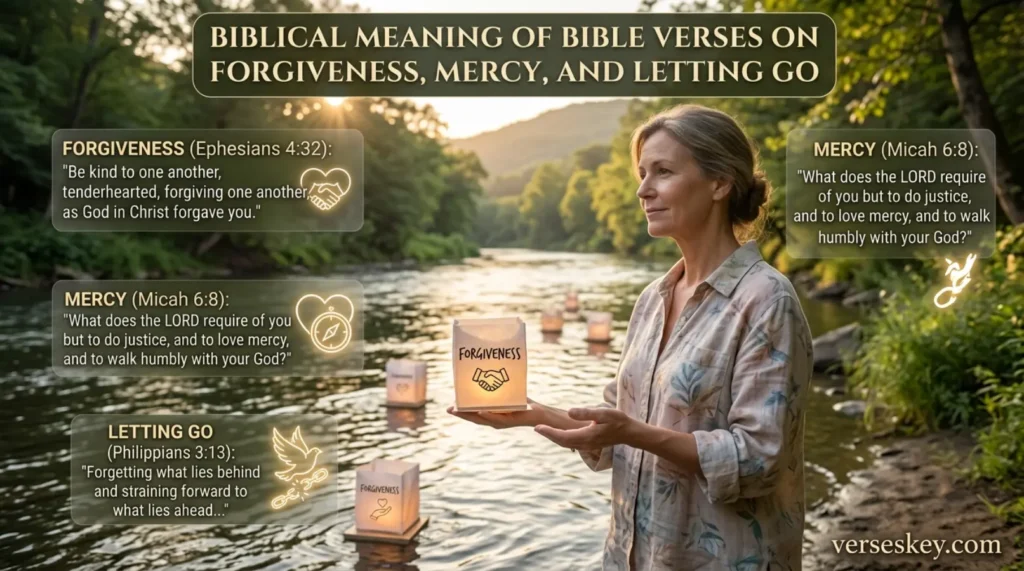
Biblical Meaning of Bible Verses on Forgiveness, Mercy, and Letting Go
The Bible presents forgiveness as an expression of God’s grace and a faithful response to His mercy. Scripture develops this theme across the entire biblical story rather than introducing it through one single verse. Early passages show God’s willingness to forgive His people, while the New Testament brings forgiveness into sharp focus through Jesus Christ.
One important Old Testament term is the Hebrew salach, commonly associated with God’s forgiveness. In the New Testament, the Greek aphiēmi can mean to release, send away, or forgive. These ideas help explain why biblical forgiveness involves releasing a debt or grievance rather than continually holding it against another person.
A central teaching appears in Colossians 3:13:
“Forgive as the Lord forgave you.”
Jesus also teaches His followers to pray for forgiveness while recognizing their responsibility to forgive others. Matthew 6:14 emphasizes that forgiveness belongs within the life of someone who has received God’s mercy.
The biblical interpretation is not that every consequence disappears immediately. Instead, forgiveness changes the believer’s response. It replaces personal revenge with trust in God, bitterness with grace, and hatred with a desire for what is righteous and good.
The deeper faith lesson is simple: people who understand God’s mercy are called to become people who show mercy.
Spiritual Significance and Symbolism
The spiritual significance of forgiveness reaches far beyond simply saying, “I forgive you.” In biblical symbolism, forgiveness can represent the removal of a burden, the restoration of fellowship, and the freedom that comes when judgment is surrendered to God.
Psalm 103:12 gives a powerful picture of God’s forgiveness:
“As far as the east is from the west, so far has he removed our transgressions from us.”
This imagery communicates distance, release, and compassionate restoration. God’s mercy does not minimize sin. Instead, it demonstrates that His grace is greater than human failure.
Forgiveness can also shape character across generations. Children often learn how to handle conflict by watching parents and caregivers. A household that practices confession, grace, patience, and reconciliation can develop healthier patterns of communication and faith.
In marriage, forgiveness can protect a relationship from becoming permanently defined by past mistakes. In friendship, it can create room for honest conversation and renewed understanding. And in spiritual communities, mercy can prevent unresolved offenses from growing into division.
Letting go does not always mean restoring the same level of closeness. Biblical wisdom allows room for boundaries, accountability, and discernment. A person may forgive while still recognizing that a relationship requires distance or significant change.
The spiritual lesson is freedom: mercy releases the heart from revenge while wisdom helps protect the future.
Biblical Interpretations in Dreams or Real Life
When forgiveness becomes a recurring theme during prayer, reflection, dreams, or daily circumstances, Christians can treat it as an opportunity for spiritual examination rather than automatically assuming a supernatural message.
A dream involving reconciliation may encourage someone to pray about unresolved anger or seek peace where a safe and appropriate conversation is possible. Seeing someone from the past may simply bring an old emotional experience back to awareness. Scripture encourages believers to test impressions carefully instead of treating every dream as a divine prediction.
Ephesians 4:31–32 provides a helpful biblical framework by contrasting bitterness and anger with kindness, compassion, and forgiveness. These qualities can guide reflection when an old wound resurfaces.
A practical spiritual question might be: “God, what response would honor You in this situation?”
Prayer can reveal attitudes that need surrender. Reflection can expose resentment that has quietly shaped decisions. Scripture can provide wisdom when emotions feel confusing.
Forgiveness in daily life can also be gradual. Someone may choose to stop rehearsing an offense today, pray for God’s help tomorrow, and continue learning healthy boundaries over time.
The safest biblical approach is to let Scripture guide interpretation. Dreams and feelings should never replace God’s Word, wise counsel, prayer, or sound judgment.
When forgiveness appears repeatedly in your spiritual reflection, it can become a gentle invitation to surrender the past and allow God to shape your response.
Practical Lessons & Faith Insights
The Bible’s teaching on forgiveness becomes most meaningful when it influences everyday choices. These practical lessons can help turn biblical knowledge into a lived expression of faith:
- Trust God with justice: Romans 12:19 reminds believers that final vengeance belongs to God, not to personal retaliation.
- Pray before reacting: A quiet prayer can interrupt anger and create space for a wiser response.
- Stay faithful in quiet seasons: Healing may take time, and spiritual growth often happens when nobody else sees the process.
- Pray consistently with your family: Families can learn to confess mistakes, apologize sincerely, and extend grace.
- Build habits of daily devotion: Regular Scripture reading helps shape the mind before difficult situations arise.
- Refuse to feed bitterness: Repeatedly rehearsing an offense can deepen resentment, while prayer can redirect the heart.
- Practice honest forgiveness: Forgiving someone does not require pretending that harmful behavior never happened.
- Set wise boundaries: Mercy and healthy boundaries can exist together.
- Encourage and serve others: Helping someone who is struggling can shift attention from personal pain toward Christlike compassion.
- Seek reconciliation wisely: Romans 12:18 encourages believers to pursue peace as far as it depends on them.
- Remember God’s mercy: Personal forgiveness becomes easier to understand when believers regularly remember the grace they have received from God.
How This Biblical Meaning Applies Today
Modern life gives people countless opportunities to hold onto resentment. Social media can preserve old conflicts, family disagreements can last for years, and personal disappointment can quietly influence new relationships. The biblical teaching on forgiveness offers a different path.
For personal growth, forgiveness helps believers examine their motives and surrender the desire to control another person’s response. It can create emotional and spiritual space for prayer, wisdom, and renewed purpose.
In marriage and family life, forgiveness should be connected with honesty. Healthy reconciliation may involve admitting wrong, listening carefully, changing harmful behavior, and rebuilding trust. Saying “forgive me” is meaningful, but consistent character makes an apology credible.
In friendships, forgiveness can prevent one painful moment from defining an entire relationship. At the same time, repeated manipulation or abuse should not be excused in the name of Christian kindness. Seeking help, creating boundaries, and protecting vulnerable people can be wise and loving responses.
For spiritual maturity, forgiveness teaches humility. Christians are reminded that they also live by God’s grace. Matthew 18:21–35 connects forgiveness with the awareness of having received mercy.
Letting go today may simply mean refusing to let yesterday’s offense govern today’s decisions. It can mean praying instead of retaliating, speaking truth instead of gossiping, and trusting God instead of demanding personal revenge.
The Christian meaning of forgiveness is ultimately Christ-centered: grace received becomes grace practiced.
Bible Verses on Forgiveness, Mercy, and Letting Go for Healing
Several Scripture references provide powerful encouragement when the heart is struggling with resentment, guilt, or the pain of broken relationships.
Ephesians 4:32 teaches believers to be kind, compassionate, and forgiving because God has forgiven them through Christ.
Colossians 3:13 calls Christians to bear with one another and forgive grievances, connecting human forgiveness with the forgiveness believers have received from the Lord.
Matthew 6:14–15 places forgiveness within Jesus’ teaching about prayer and relationships, showing that mercy is not an optional decoration of Christian life.
Luke 6:36 points believers toward the character of their heavenly Father by calling them to be merciful.
Psalm 86:5 celebrates God’s readiness to forgive and His abundant love toward those who call upon Him.
Psalm 103:8–12 portrays God as compassionate, gracious, slow to anger, and abundant in steadfast love.
Isaiah 43:25 reveals God’s gracious willingness to blot out transgressions and remember sins no more.
Micah 7:18 celebrates God’s delight in mercy, offering profound hope to people who recognize their failures.
Romans 12:18–19 encourages believers to pursue peace and leave ultimate vengeance in God’s hands.
1 Peter 4:8 emphasizes the importance of love in covering a multitude of sins, reminding Christians that genuine love responds to failure with grace rather than constant hostility.
Together, these passages show that forgiveness is not isolated advice. It is woven into the biblical picture of God’s character and the believer’s calling.
Why Forgiveness Does Not Mean Forgetting Everything
A common misunderstanding is that biblical forgiveness requires a person to erase every memory of an offense. Scripture does not require believers to develop amnesia. Remembering an experience can sometimes provide wisdom about future choices.
Bible Verses on Forgiveness means refusing to make revenge the governing purpose of the heart. A person can remember what happened while choosing not to continually punish someone through hatred, retaliation, or bitterness.
This distinction is important for relationships involving serious betrayal or repeated harmful behavior. Trust may need to be rebuilt gradually, and reconciliation may require evidence of genuine repentance and changed behavior.
Jesus’ teaching on forgiveness should never be used to pressure someone into remaining in a dangerous situation. Christian mercy does not require enabling wrongdoing.
Letting go can therefore involve several different decisions:
- Releasing personal revenge.
- Asking God for help with anger.
- Telling the truth about what happened.
- Establishing appropriate boundaries.
- Allowing consequences to remain where necessary.
- Praying for wisdom about future contact.
- Pursuing reconciliation when it is safe and appropriate.
- Entrusting ultimate justice to God.
Biblical forgiveness is strong rather than passive. It acknowledges the seriousness of wrong while refusing to let that wrong become the permanent ruler of the heart.
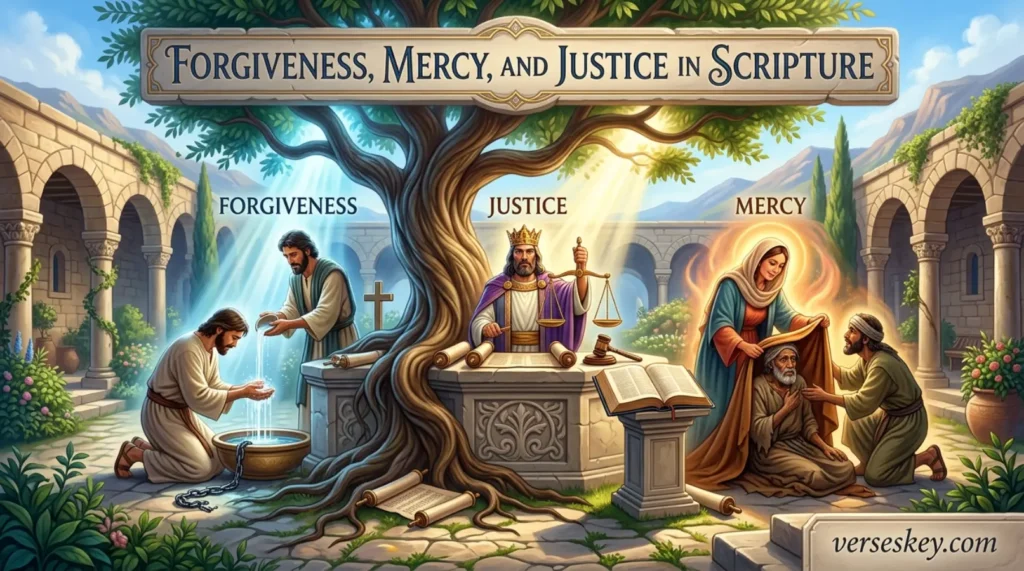
Forgiveness, Mercy, and Justice in Scripture
The Bible Verses on Forgiveness holds mercy and justice together. God’s mercy does not mean that wrongdoing is irrelevant. Scripture repeatedly teaches that God sees injustice and cares about righteousness.
Romans 12:19 tells believers not to take personal vengeance because God is the ultimate judge. This teaching can bring comfort to people who have experienced unfair treatment. They do not have to carry the impossible responsibility of making every wrong right themselves.
At the same time, biblical forgiveness can coexist with accountability. Nathan confronted David after David’s serious sin in 2 Samuel 12. The Bible records both God’s mercy and the consequences that followed.
This balance is important for modern Christian living. Forgiveness should not become an excuse for avoiding truth, reporting wrongdoing, seeking protection, or establishing appropriate consequences.
Mercy asks, “How can I respond with grace?”
Justice asks, “What is right?”
Wisdom asks, “What should I do next?”
Biblical faith allows all three questions to exist together.
The cross of Christ provides the clearest Christian picture of this relationship. God’s grace does not treat sin as insignificant. Instead, Scripture presents Christ’s sacrifice as central to God’s plan of redemption.
For believers, forgiveness becomes a response shaped by the gospel: truth matters, sin matters, justice matters, and God’s mercy is powerful enough to bring redemption.
How Jesus Teaches Forgiveness and Mercy
Jesus placed forgiveness near the center of His teaching about relationships. His words challenged people to move beyond ordinary human standards of retaliation and toward the radical mercy of God’s kingdom.
In Matthew 18:21–22, Peter asks how often he should forgive. Jesus responds with an answer that points toward generous, repeated forgiveness rather than keeping a strict numerical score.
The parable that follows presents a servant who receives enormous mercy but refuses to extend comparable mercy to another person. The story exposes the contradiction of asking for grace while remaining unwilling to show grace.
Jesus also teaches forgiveness through prayer. The Lord’s Prayer connects receiving forgiveness with forgiving others, reminding disciples that God’s grace should reshape their relationships.
At the cross, Jesus demonstrates extraordinary mercy. Luke 23:34 records His prayer concerning those responsible for His crucifixion. His response reveals the depth of Christ’s compassion even in suffering.
These teachings do not make forgiveness easy. They make forgiveness possible through a transformed heart.
The Christian response is not to manufacture perfect feelings overnight. It is to keep returning to Christ, asking for strength to release resentment and wisdom to act according to truth.
Jesus’ example shows that forgiveness is not weakness. It can be one of the clearest expressions of spiritual strength.
Frequently Asked Questions (FAQ)
What does Bible Verses on Forgiveness, Mercy, and Letting Go mean in the Bible?
The theme means releasing personal resentment, extending grace, trusting God’s justice, and responding to wrongdoing according to biblical wisdom. Scripture connects forgiveness with God’s mercy and Christ’s example.
What is the spiritual meaning of forgiveness?
Forgiveness spiritually represents releasing revenge and allowing God’s grace to shape the heart. It can bring freedom from bitterness while encouraging humility, compassion, wisdom, and peace.
Why is forgiveness important in Christianity?
Forgiveness is important because Christians are called to reflect the mercy they have received from God. Jesus repeatedly taught His followers to forgive and practice grace in relationships.
What Bible verse talks about forgiveness?
Colossians 3:13 is one of the clearest passages: believers are instructed to forgive others as the Lord has forgiven them. Ephesians 4:32 gives a similar message.
Does the Bible say I must forgive someone who hurt me?
Yes, Scripture consistently calls believers toward forgiveness. However, forgiveness does not require ignoring danger, removing healthy boundaries, or immediately restoring trust.
Does forgiving someone mean I have to trust them again?
No. Forgiveness and trust are related but different. Forgiveness can be offered freely, while trust may need to be rebuilt through repentance, honesty, consistency, and changed behavior.
How can I forgive someone when I still feel hurt?
Begin with prayer and honesty before God. Ask for help releasing revenge, meditate on Scripture, maintain wise boundaries, and allow the healing process to develop over time.
What does letting go mean biblically?
Biblical letting go means surrendering resentment and personal vengeance to God while choosing a response shaped by grace, truth, wisdom, and faith. It does not mean denying reality or refusing appropriate action.
Conclusion
Bible Verses on Forgiveness, Mercy, and Letting Go reveal a powerful biblical truth: God’s mercy can transform the way we respond to pain, failure, conflict, and broken relationships. Scripture does not ask believers to pretend that wounds are insignificant. Instead, it invites them to place those wounds before God and refuse to let bitterness control the future.
From the Old Testament’s testimony of God’s compassion to Jesus’ teaching on forgiveness and His example at the cross, the Bible consistently points toward grace. Forgiveness can require courage. Mercy can require humility. Letting go can require repeated prayer. Yet each step can become an opportunity to grow deeper in faith.
Remember that forgiving someone does not erase wisdom, accountability, or healthy boundaries. It means surrendering revenge and allowing God to remain the ultimate judge.
When the past feels heavy, return to Scripture. When anger rises, return to prayer. And when reconciliation is possible, pursue peace with wisdom. When justice is beyond your control, trust God.
May these Bible Verses on Forgiveness, Mercy, and Letting Go remind you that God’s grace is greater than your deepest wound and that your future does not have to be controlled by yesterday’s pain. Let God heal what you cannot fix, strengthen what has become weak, and teach your heart to release what you were never meant to carry forever. Share this message with someone who may need the hope of forgiveness today.

I am Grace Willow passionate about sharing the wisdom and comfort of Scripture. Through my writing, I explore faith, hope, and the timeless lessons of the Bible. I aim to bring God’s Word to life in ways that inspire and guide daily living. My verses and reflections seek to encourage, uplift, and strengthen readers’ faith. For me, writing about Scripture is a way to connect hearts to God’s love.