
Unshakable Bible Verses For Strength and Hope can bring courage, comfort, and renewed faith when life feels difficult or uncertain. These powerful Scriptures remind you that God remains faithful, even when circumstances seem overwhelming. Find encouraging Bible verses for strength, hope, prayer, perseverance, and trusting God through every challenge.
Let these timeless words strengthen your heart, renew your hope, and remind you that you never face struggles alone. Each verse can offer a meaningful reminder of God’s presence and promises when you need encouragement to keep moving forward with faith.
Our easy-to-use copy option helps you save your favorite verses instantly for prayer, reflection, or sharing. Use the quick Share on WhatsApp button to encourage friends and loved ones with God’s Word today.
Quick Answer:
Unshakable Bible Verses For Strength and Hope remind believers that God remains faithful during hardship, uncertainty, and waiting. Scriptures such as Isaiah 40:31, Psalm 46:1, and Romans 15:13 teach that true strength comes from trusting God, while biblical hope rests confidently in His promises and presence.
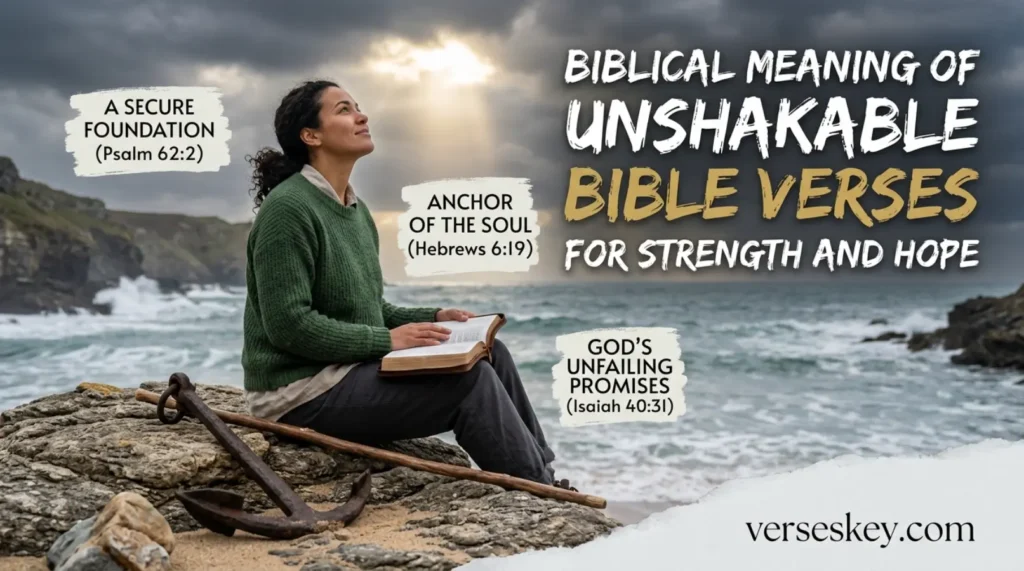
Biblical Meaning of Unshakable Bible Verses For Strength and Hope
The Bible presents strength as more than physical ability. Biblical strength often describes courage, endurance, inner stability, and dependence upon God. In the Old Testament, the Hebrew word oz can communicate strength, might, or power. The Hebrew tiqvah, commonly associated with hope, carries the idea of expectation or confident waiting.
A foundational expression appears in Exodus 15:2, where Moses and Israel praise God after deliverance from Egypt: “The LORD is my strength and song.” This setting is important because Israel’s confidence follows God’s saving action rather than human ability.
Isaiah 40:31 gives another central biblical picture: those who wait upon the Lord receive renewed strength. The Hebrew imagery emphasizes trusting, waiting, and expecting God’s faithfulness.
In the New Testament, the Greek word elpis describes hope as confident expectation, while dynamis refers to power or strength. Christian hope therefore rests not merely on positive thinking but on God’s character and promises.
The deeper biblical interpretation is clear: genuine strength grows when believers surrender self-reliance and trust God. Hope becomes durable when it is anchored in His faithfulness rather than temporary circumstances. These Scriptures teach endurance, prayer, obedience, and confidence in God’s purpose.
Spiritual Significance and Symbolism
The spiritual significance of strength and hope becomes especially clear through the Bible’s repeated symbols. God is described as a rock because He provides stability. He is a fortress because He offers protection. He is a shepherd because He guides and cares for His people.
Psalm 46:1 declares, “God is our refuge and strength.” The verse does not suggest that trouble will never come. Instead, it teaches that God’s presence remains available in trouble.
Hope also carries powerful biblical symbolism. A living hope points beyond today’s circumstances toward God’s promises and ultimate redemption. Romans 15:13 connects hope with joy, peace, and the power of the Holy Spirit.
These truths shape character over time. A believer who continually trusts God can learn patience during difficult seasons, humility when plans change, and compassion toward people who are struggling.
Faith can also influence family relationships across generations. Parents and grandparents can teach children to pray during uncertainty, remember God’s faithfulness, and respond to difficulties with courage rather than despair.
The Christian meaning is not that faithful people never become tired or afraid. Scripture includes honest cries, grief, questions, and moments of weakness. The spiritual lesson is that weakness does not have to become the final word. God’s faithfulness gives believers a reason to keep walking.
Biblical Interpretations in Dreams or Real Life
Seeing themes of strength, hope, refuge, light, mountains, storms, or protection in dreams or daily life can feel spiritually meaningful. Christians should approach such experiences carefully, remembering that Scripture—not personal symbolism alone—is the foundation for biblical interpretation.
A dream about standing firmly during a storm may serve as a personal reminder of perseverance, but it should not automatically be treated as a divine prediction. Likewise, repeatedly encountering a Bible verse about courage may encourage someone to return to prayer and God’s promises.
Scripture gives believers a safer framework for reflection. Philippians 4:6–7 directs Christians toward prayer instead of anxious dependence. Psalm 119:105 presents God’s Word as a lamp for the path. James 1:5 encourages believers to ask God for wisdom.
Positive spiritual reflection can therefore lead to practical faith:
- A difficult season can become an invitation to pray more honestly.
- A repeated Scripture can encourage deeper meditation.
- A period of waiting can develop patience and trust.
- A personal fear can become an opportunity to remember God’s character.
- A moment of weakness can encourage dependence upon Christ.
Biblical wisdom avoids superstition while leaving room for God to use Scripture, prayer, circumstances, and faithful counsel to encourage His people.
Practical Lessons & Faith Insights
- Trust God in daily decisions. Bring important choices to prayer and compare your plans with biblical wisdom instead of relying only on emotion or pressure.
- Stay faithful in quiet seasons. God’s work is not limited to dramatic moments. Ordinary obedience, patience, and prayer can form deep spiritual maturity.
- Pray consistently with your family. Make prayer a natural part of family life, especially when facing uncertainty, illness, financial pressure, decisions, or transitions.
- Build habits of daily devotion. Read Scripture slowly, reflect on its meaning, pray over what you learn, and allow biblical truth to shape your choices.
- Encourage and serve others. Strength is not only something to receive. God can use your words, generosity, time, and compassion to strengthen someone else.
- Remember God’s past faithfulness. Keep a record of answered prayers, difficult seasons you survived, and moments when God provided wisdom or encouragement.
- Replace fearful thoughts with biblical truth. Instead of allowing anxiety to control every decision, intentionally meditate on passages about God’s presence and faithfulness.
- Practice patient hope. Biblical hope does not demand immediate answers. It teaches believers to wait with confidence while continuing to obey God.
How Unshakable Bible Verses For Strength and Hope Apply Today
Modern life can create constant pressure through work, finances, relationships, social media, family responsibilities, and uncertainty about the future. The biblical message of strength and hope remains deeply relevant because it addresses the heart beneath these circumstances.
For personal growth, Scripture encourages believers to develop resilience without pretending that hardship is painless. Faith can coexist with tears, questions, and exhaustion.
In marriage and family life, biblical strength can appear through forgiveness, patience, honest communication, prayer, and sacrificial love. A husband and wife may not control every circumstance, but they can choose to face challenges together while seeking God’s wisdom.
Relationships also benefit from biblical hope. Instead of responding immediately with anger or discouragement, believers can pause, pray, listen, and seek reconciliation.
Spiritual maturity develops when faith becomes more than something practiced during emergencies. Daily prayer, Scripture reading, worship, service, generosity, and fellowship help establish a life that is increasingly rooted in God’s truth.
The goal is not to become emotionally unshakable through personal effort. Christian maturity means becoming increasingly anchored in God. Psalm 1 portrays a faithful person like a tree planted near streams of water—stable because of a dependable source.
That image offers a practical lesson for today: strong faith grows from continual connection with God rather than occasional religious activity.
Bible Verses That Give Strength During Hard Times
Psalm 46:1 is one of Scripture’s clearest reminders that God is present in distress: “God is our refuge and strength.”
This Unshakable Bible Verses for Strength provides a powerful biblical perspective. God does not promise that His people will never encounter trouble. He promises Himself as refuge within it.
Isaiah 41:10 adds another comforting assurance: “Fear thou not; for I am with thee.” The emphasis falls on God’s presence and help rather than human perfection.
2 Corinthians 12:9 offers a different perspective on weakness. Paul records Christ’s words: “My grace is sufficient for thee.” Christian strength can therefore appear most clearly when a person recognizes personal limitations and depends upon divine grace.
Psalm 23 also gives profound comfort through its shepherd imagery. The Lord’s guidance means believers do not have to navigate every valley alone.
Joshua 1:9 connects courage with God’s presence: “Be strong and of a good courage.” The command is followed by the reminder that the Lord is with His servant.
These passages offer different dimensions of strength: refuge during trouble, courage during uncertainty, grace during weakness, guidance during valleys, and confidence when facing difficult responsibilities.
Together, they teach that biblical strength is relational. It grows through trust in God rather than through the belief that we must handle everything alone.
Bible Verses That Renew Hope and Courage
Romans 15:13 presents one of the Bible’s most beautiful pictures of Christian hope: “The God of hope fill you with all joy and peace in believing.”
Hope in Scripture is not merely wishing for a preferred outcome. It is confidence grounded in God’s nature and promises.
Isaiah 40:31 teaches that those who wait on the Lord will renew their strength. The passage speaks to people who feel exhausted and reminds them that waiting can be an expression of faith rather than failure.
Lamentations 3:22–23 points believers toward God’s unfailing mercy. The writer speaks from a setting of profound suffering yet deliberately remembers God’s faithfulness.
Jeremiah 29:11 is often associated with future hope, but its historical setting matters. The promise was given to Jewish exiles facing a long period of displacement. It demonstrates that God’s purposes can remain active even when His people are living through an unwanted season.
1 Peter 1:3 describes believers as receiving a “lively hope” through the resurrection of Jesus Christ. Christian hope ultimately looks beyond temporary circumstances toward the living Christ and God’s eternal promises.
These Unshakable Bible Verses for Strength encourage courage without denying reality. They teach believers to keep praying, keep trusting, keep obeying, and keep looking toward God’s faithfulness.
Strength and Hope When You Feel Weak
Feeling weak does not automatically mean that faith has failed. Scripture contains many faithful people who experienced exhaustion, fear, grief, loneliness, and uncertainty.
Elijah became deeply discouraged after an intense period of ministry. David repeatedly expressed distress in the Psalms. Paul described severe hardships in his ministry. Their stories show that spiritual strength does not require pretending to be emotionally invulnerable.
Psalm 34:18 says, “The LORD is nigh unto them that are of a broken heart.” God’s response to human weakness is not contempt. Scripture repeatedly presents Him as compassionate toward those who call upon Him.
Jesus also invited weary people to come to Him. Matthew 11:28 records His gracious invitation: “Come unto me, all ye that labour and are heavy laden.”
The practical faith lesson is simple: bring weakness to God rather than hiding it from Him. Pray honestly. Read Scripture slowly. Seek wise Christian fellowship. Rest when necessary. Continue doing the next faithful thing.
Strength may not always feel dramatic. Sometimes it looks like getting up again, forgiving someone, asking for help, praying one more time, or choosing faithfulness when nobody notices.
God’s strength can work through ordinary acts of perseverance.
Strength and Hope Through Prayer and God’s Word
Prayer and Scripture belong together in a healthy Christian life. Prayer turns the heart toward God, while Scripture provides a trustworthy foundation for understanding His character and promises.
When fear rises, a believer can pray through passages such as Psalm 46. When feeling inadequate, Isaiah 40:31 can redirect attention toward God’s strength. During uncertainty, Proverbs 3:5–6 reminds believers to trust the Lord rather than depending exclusively on personal understanding.
Meditating on Scripture is more than repeatedly reading words. It means slowing down, considering their meaning, and asking how biblical truth should shape attitudes and actions.
A simple devotional rhythm can help:
- Read a short passage.
- Identify what it teaches about God.
- Notice what it reveals about faith or obedience.
- Pray the truth back to God.
- Choose one practical action for the day.
- Return to the passage when discouragement appears.
Family devotion can follow the same pattern. Parents can read a short verse with children, explain its basic meaning, pray together, and discuss one way to live it.
Over time, these practices can establish spiritual habits that remain valuable during both peaceful and difficult seasons.

How Families Can Share Strength and Hope
Faith becomes especially meaningful when biblical truth moves from private devotion into family life. Children often learn spiritual resilience by watching how adults respond to pressure.
Families can create simple traditions around Scripture and prayer. A household might read one verse at breakfast, pray together before a major decision, or share one reason for gratitude before bedtime.
Grandparents can also preserve stories of God’s faithfulness by telling younger generations how prayer, perseverance, and Scripture shaped their lives.
Deuteronomy 6 emphasizes teaching God’s commands within everyday life. This suggests that faith formation is not limited to formal religious moments. Conversations, meals, journeys, celebrations, disappointments, and family decisions can all become opportunities for spiritual teaching.
Parents should also avoid presenting Christianity as a promise that life will always be comfortable. Children benefit from seeing that Christians can acknowledge sadness while still trusting God.
A family rooted in biblical hope learns to say, “This is difficult, but God is still faithful.”
That message can influence generations. It teaches children that courage does not mean having no fear, and hope does not mean pretending that problems do not exist.
Biblical strength grows when families learn to face reality while remaining anchored in God’s promises.
Why Biblical Hope Is Different From Positive Thinking
Positive thinking generally focuses on maintaining an optimistic attitude. Biblical hope goes deeper because it is grounded in God rather than in circumstances alone.
A person may hope that a difficult situation changes soon. Christian hope can remain firm even when the desired outcome is uncertain.
Romans 8:24–25 connects hope with patient waiting. The biblical picture is not passive despair but confident endurance while waiting for what God has promised.
This distinction matters during suffering. If hope depends entirely on receiving a specific answer, disappointment can quickly destroy confidence. When hope rests in God’s character, believers can continue trusting even when circumstances develop differently than expected.
Christian hope also has an eternal dimension. The resurrection of Jesus Christ stands at the center of New Testament hope. Because Christ lives, believers have reason to look beyond temporary suffering toward God’s ultimate redemption.
This does not make present pain insignificant. Instead, it gives suffering a larger context.
The biblical lesson is therefore not “always stay positive.” It is “remain anchored in God.”
Such hope can produce patience, courage, compassion, endurance, and peace. It allows believers to acknowledge reality honestly while refusing to believe that hardship has the final word.
Frequently Asked Questions (FAQ)
What do Unshakable Bible Verses For Strength and Hope mean?
Unshakable Bible Verses For Strength and Hope are Scriptures that encourage believers to trust God’s presence, promises, power, and faithfulness during difficult seasons. They provide biblical encouragement for courage, endurance, peace, and confident hope.
What is the spiritual meaning of strength in the Bible?
Biblical strength often means relying on God for courage, endurance, wisdom, and power rather than depending entirely on personal ability. Scripture shows that God’s strength can become especially evident during human weakness.
What is the spiritual meaning of hope in the Bible?
Biblical hope means confident expectation based on God’s faithfulness. It differs from uncertain wishing because Christian hope is rooted in God’s promises, Christ’s resurrection, and His ultimate purposes.
What Bible verse talks about strength and hope?
Isaiah 40:31 is a major passage connecting waiting on the Lord with renewed strength. Psalm 46:1 also teaches that God is a refuge and strength during trouble.
Why are Bible verses about strength important?
They remind believers that difficult circumstances do not change God’s character. Such Scriptures can encourage prayer, perseverance, wise decisions, and renewed trust during seasons of fear or uncertainty.
How can I use these Bible verses when I feel discouraged?
Read a short passage slowly, identify its message about God, pray honestly, and choose one practical response. Repeating Scripture throughout the day can help redirect attention toward biblical truth.
Can Bible verses give strength to a family?
Yes. Families can read Scripture together, pray over challenges, discuss biblical lessons, and remember God’s faithfulness. These practices can help children develop lasting habits of faith and trust.
What does the Bible say about staying hopeful during hardship?
Scripture repeatedly encourages believers to persevere while trusting God. Romans 5:3–5 connects suffering with perseverance, character, and hope, showing that hardship can become part of spiritual formation.
Conclusion
Unshakable Bible Verses For Strength and Hope point believers toward a truth that remains steady through changing circumstances: God is faithful. Scripture does not promise a life without storms, disappointment, weakness, or waiting. Instead, it reveals a God who remains present in the storm and gives His people reasons to keep trusting Him.
From Psalm 46’s picture of God as refuge and strength to Isaiah 40’s promise of renewed strength, the Bible consistently directs weary hearts away from self-reliance and toward God. Biblical hope is not wishful thinking. It is confident trust grounded in God’s character, Christ’s resurrection, and His enduring promises.
The deepest faith lesson is that strength does not always mean feeling powerful. Sometimes strength means praying while afraid, continuing while tired, forgiving while wounded, waiting without giving up, and trusting God when the path ahead is unclear.
May these Scriptures become more than words you read. May they become truths you remember in difficult moments, promises you pray over your family, and encouragement you share with someone who feels weary today.
When your circumstances shake, hold firmly to the God who does not change. His presence can steady your heart, His Word can renew your hope, and His grace can give you strength for the next step. Share these verses with someone who needs that reminder today.

I am Grace Willow passionate about sharing the wisdom and comfort of Scripture. Through my writing, I explore faith, hope, and the timeless lessons of the Bible. I aim to bring God’s Word to life in ways that inspire and guide daily living. My verses and reflections seek to encourage, uplift, and strengthen readers’ faith. For me, writing about Scripture is a way to connect hearts to God’s love.