
Top Bible Verses for Peace to Calm Your Heart can bring comfort when life feels overwhelming, uncertain, or stressful. These uplifting Scriptures remind you that God offers peace, strength, and reassurance during difficult moments.
From quiet reflection to heartfelt prayer, these verses can help settle anxious thoughts and renew your trust in God. Let God’s Word calm your heart and guide you toward lasting peace today.
Our easy-to-use copy option helps you save your favorite verse instantly. You can also use the quick Share on WhatsApp button to encourage someone who needs comfort and hope.
Quick Answer:
Top Bible Verses for Peace to Calm Your Heart remind believers that true peace comes from trusting God. Scriptures such as Philippians 4:6–7, John 14:27, Isaiah 26:3, and Psalm 4:8 offer comfort, strengthen faith, and encourage Christians to surrender anxiety to God’s care.
Biblical Meaning of Top Bible Verses for Peace to Calm Your Heart
The biblical concept of peace appears throughout Scripture, beginning in the Old Testament and reaching its fullest Christian meaning through Christ. The Hebrew word shalom carries the idea of completeness, welfare, wholeness, safety, and well-being. It describes more than temporary calm. It points toward a life ordered under God’s care.
One important early reference appears in Genesis 15:15, where God tells Abram that he will go to his fathers “in peace.” Later Scripture develops the theme more deeply, especially in Isaiah 26:3, which connects steadfast trust in God with perfect peace.
Jesus gives this promise in John 14:27:
“Peace I leave with you, my peace I give you.”
The Greek word eirēnē, often translated as peace, can describe harmony, tranquility, and reconciliation. In the New Testament, peace is closely connected with God’s relationship with humanity through Jesus Christ.
Biblical interpretation therefore shows that peace does not mean believers will never experience suffering. Instead, Christian peace means trusting God’s character when circumstances remain unsettled. Philippians 4:6–7 teaches believers to bring anxieties to God through prayer, thanksgiving, and supplication.
The deeper faith lesson is simple: God’s peace begins where confident trust replaces the need to control everything.

Spiritual Significance and Symbolism
Peace has powerful biblical symbolism because Scripture frequently contrasts it with fear, conflict, anxiety, and spiritual unrest. God’s peace represents a heart that rests in His character even when the surrounding situation has not changed.
In Isaiah 26:3, the prophet connects peace with a mind that remains focused on God. This reveals an important spiritual principle: what continually occupies the mind can influence the condition of the heart. Scripture redirects attention from changing circumstances toward an unchanging Lord.
Peace also carries relational meaning. Biblical peace encourages forgiveness, patience, gentleness, reconciliation, and compassionate communication. A peaceful home does not mean a family never disagrees. It means family members learn to seek truth, practice grace, listen carefully, and pursue restoration.
Across generations, these faith lessons can become part of a family’s spiritual heritage. Parents can teach children to pray during frightening moments. Couples can place difficult decisions before God instead of allowing fear to dominate their conversations. Friends can remind one another of God’s promises during seasons of uncertainty.
The Christian meaning of peace ultimately points beyond emotional comfort. It reflects confidence in God’s presence and purposes.
When believers cultivate prayerful trust, peace can shape character by producing patience instead of panic, wisdom instead of impulsiveness, and hope instead of despair.
Top Bible Verses for Peace to Calm Your Heart
Different passages speak to different moments of emotional and spiritual need. These Scripture references can become meaningful starting points for prayer and meditation.
- Philippians 4:6–7 — Paul teaches believers to bring anxiety to God through prayer and thanksgiving, trusting His peace to guard their hearts and minds.
- John 14:27 — Jesus promises His disciples a distinctive peace that differs from the temporary security offered by the world.
- Isaiah 26:3 — This passage connects lasting peace with steadfast trust in God.
- Psalm 4:8 — David describes the security of lying down and sleeping peacefully because God provides safety.
- Psalm 23:4 — The familiar shepherd imagery reminds believers that God’s presence remains with them even while walking through dark valleys.
- Psalm 46:10 — The call to “be still” directs the heart toward recognition of God’s sovereignty.
- Psalm 29:11 — Scripture connects the Lord’s blessing with strength and peace for His people.
- Numbers 6:24–26 — The priestly blessing concludes with a beautiful prayer that God would give His people peace.
- Isaiah 41:10 — God tells His people not to fear because He is with them, strengthens them, and helps them.
- Colossians 3:15 — Paul encourages believers to allow the peace of Christ to rule within their hearts.
- 2 Thessalonians 3:16 — Paul describes the Lord as the source of peace and prays for His presence with believers.
- Romans 15:13 — This passage connects faith in God with joy, peace, and hope through the power of the Holy Spirit.
Together, these passages reveal a consistent biblical message: peace grows through trust, prayer, God’s presence, and confidence in His promises.
Biblical Interpretations in Dreams or Real Life
Seeing peaceful scenes in dreams, experiencing unexpected calm during prayer, or repeatedly encountering Scripture about peace can serve as a meaningful prompt for spiritual reflection. Such experiences should not automatically be treated as direct prophecy or a guaranteed message from God. Biblical discernment keeps Scripture at the center.
A dream involving calm water, a quiet home, light, rest, or reconciliation may encourage personal reflection about areas where the heart needs greater trust. The symbolism itself should not be treated as a fixed biblical code. Scripture provides the stronger foundation for understanding spiritual matters.
In everyday life, a sudden reminder of a peace-filled verse may encourage a believer to pause and pray instead of reacting immediately. A difficult conversation can become an opportunity to practice patience. A stressful decision can become a reason to seek God’s wisdom.
Philippians 4:6–7 gives a particularly helpful framework: bring concerns to God, pray specifically, give thanks, and trust Him with the outcome.
The safest faith-based interpretation is therefore not, “This experience predicts what will happen.” A healthier biblical response is, “This moment reminds me to seek God, examine my heart, and trust His Word.”
Peace can become a gentle invitation to return to God’s presence.
Practical Lessons & Faith Insights
The biblical teaching on peace becomes most meaningful when it moves from reading into daily practice.
- Trust God in daily decisions. Pray before making important choices instead of allowing fear to make every decision for you.
- Stay faithful in quiet seasons. Remember that God’s silence does not mean His absence. Continue praying, serving, and following Scripture.
- Pray consistently with your family. Create simple moments for family prayer, especially when someone is facing stress, grief, uncertainty, or an important decision.
- Build habits of daily devotion. Read a short Scripture passage each morning or evening and spend a few minutes reflecting on its meaning.
- Encourage and serve others. Share a comforting verse with someone who is struggling and offer practical help when possible.
- Practice thanksgiving. Naming God’s blessings can redirect attention away from constant worry.
- Guard your thoughts. When anxious thoughts become repetitive, replace them with biblical truth and prayer.
- Pursue reconciliation. Peace includes healthy relationships, so take appropriate steps toward forgiveness, honest communication, and restoration.
- Rest without guilt. Psalm 4:8 reminds believers that peaceful rest can be an expression of trust in God’s protection.
- Return to Scripture during pressure. Keep several trusted verses available for moments when fear or uncertainty becomes intense.
These habits do not promise a problem-free life. They help believers develop a deeper pattern of dependence on God.
How Top Bible Verses for Peace to Calm Your Heart Applies Today
Modern life creates countless opportunities for anxiety. Constant notifications, financial concerns, family responsibilities, workplace pressure, relationship difficulties, and uncertainty about the future can keep the mind active long after the day has ended.
The biblical response is not to pretend these concerns are insignificant. Scripture invites believers to bring real concerns honestly before God. Prayer becomes a place where fear can be acknowledged without allowing fear to become the final authority.
For personal growth, peace encourages emotional maturity. Instead of responding instantly to every difficult situation, believers can pause, pray, seek wisdom, and choose a thoughtful response.
In marriage and family life, biblical peace can influence the way disagreements are handled. Speaking gently, listening carefully, apologizing when necessary, and refusing to escalate every conflict can create a healthier environment.
In friendships and community relationships, peace encourages believers to become sources of encouragement rather than adding unnecessary tension. A timely Scripture, thoughtful message, practical act of service, or patient conversation can make a meaningful difference.
For spiritual maturity, peace teaches surrender. Christians can work diligently while recognizing that ultimate control belongs to God. This balance allows responsibility without constant fear.
The goal is not to escape every difficult circumstance. It is to develop a heart that increasingly says, “God is with me, and I can trust Him here.”
Bible Verses for Peace When You Feel Anxious
Anxiety can make small problems feel enormous and uncertain situations feel impossible. Scripture responds by repeatedly directing believers toward God’s presence and promises.
Philippians 4:6–7 is especially significant because it gives a practical pattern for anxious moments: pray, ask God specifically for help, give thanks, and trust His peace to guard the heart and mind.
Isaiah 41:10 addresses fear with God’s presence and strength. The passage does not deny difficulty. Instead, it emphasizes that believers are not facing difficulty alone.
Psalm 56:3 offers a remarkably simple response to fear: “When I am afraid, I will trust in thee.” The verse acknowledges fear while directing the heart toward faith.
Psalm 94:19 also speaks to moments when anxious thoughts multiply, pointing toward God’s consolations as a source of delight.
These passages can be read slowly rather than hurriedly. Take one verse, identify the fear behind the prayer, and consciously place that concern before God.
A helpful prayer may be as simple as:
“Lord, You know what is troubling my heart. Help me trust You with what I cannot control. Give me wisdom for what I can do and peace for what I must leave in Your hands.”
Bible Verses for Peace at Night
Nighttime can make worries feel louder. The day’s distractions disappear, leaving thoughts about tomorrow, finances, family, health, work, and unresolved conversations.
Psalm 4:8 provides one of Scripture’s most comforting pictures of nighttime trust: David can lie down and sleep because God makes him dwell safely.
Psalm 23 also offers powerful imagery for nighttime reflection. The Lord is pictured as a shepherd who leads, restores, and accompanies His people through valleys.
Psalm 91 emphasizes God’s protective care, while Psalm 121 repeatedly directs attention toward the Lord as the keeper of His people.
These passages should not be treated as magical formulas guaranteeing that nothing difficult will happen. Their deeper biblical significance is an invitation to trust God’s character and care.
Before sleeping, consider reading one peaceful passage slowly. Thank God for specific blessings from the day. Confess worries honestly. Ask for wisdom for tomorrow. Then consciously release what cannot be solved during the night.
Rest can become an act of faith: “I have done what I can today, and I trust God with what remains.”
Bible Verses for Peace During Difficult Times
Scripture never presents faith as a promise that believers will avoid every trial. Jesus Himself told His disciples that they would face trouble, while also pointing them toward courage and trust.
John 16:33 is especially meaningful because Jesus speaks about trouble while assuring His followers of His victory. This creates a mature understanding of peace: Christian peace can exist alongside hardship.
Psalm 46 presents God as a refuge and strength in trouble. The imagery encourages believers to recognize God’s nearness when circumstances feel unstable.
Romans 8:28 is another important passage for Christian hope. It teaches that God works for good in the lives of those who love Him, giving believers confidence in God’s larger purpose even when they cannot understand every event.
During difficult seasons, peace may look different from emotional happiness. Sometimes peace means having enough strength to take the next step. Sometimes it means choosing forgiveness. At other times it means waiting patiently instead of forcing an outcome.
Biblical peace grows through perseverance. It teaches the heart to say, “I may not understand everything happening right now, but I know God remains trustworthy.”
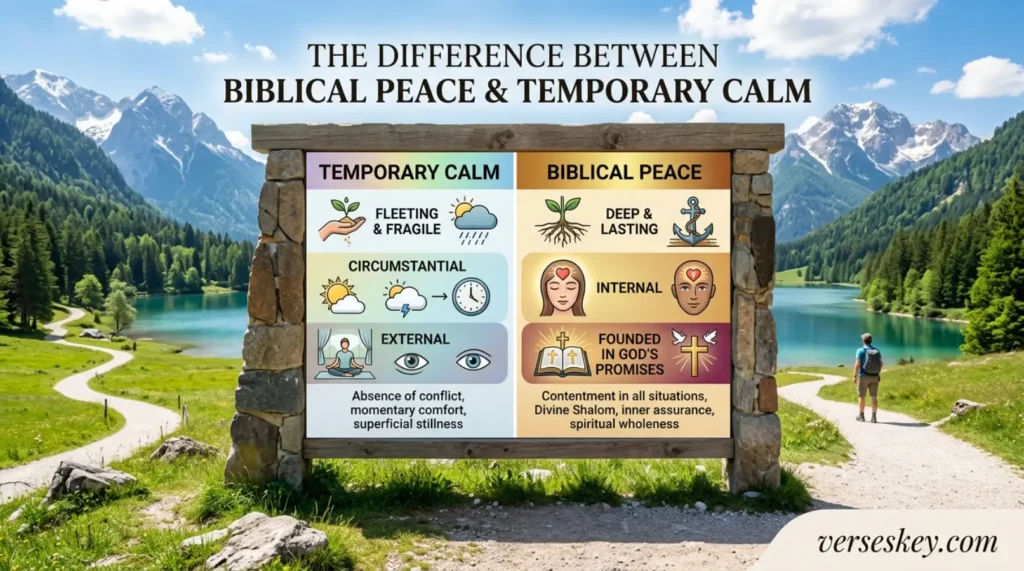
The Difference Between Biblical Peace and Temporary Calm
Temporary calm often depends on circumstances. When everything goes well, a person may feel relaxed. When circumstances change, that calm can disappear quickly.
Biblical peace has a deeper foundation. It is rooted in God’s character, promises, presence, and relationship with His people.
This distinction matters because Scripture does not promise that Christians will always feel emotionally peaceful. Believers can experience grief, anger, disappointment, fear, and sorrow while still trusting God.
Jesus demonstrated this depth of faith. In the Garden of Gethsemane, He experienced profound anguish while continuing to submit Himself to the Father’s will. His example shows that spiritual peace does not require pretending that pain does not exist.
Biblical peace therefore includes honest emotions and faithful surrender. It allows believers to cry, pray, seek help, and acknowledge hardship without abandoning hope.
A calm moment may disappear when circumstances change. Trust in God can continue through changing circumstances.
That is one reason the Bible’s teaching about peace remains so powerful. It offers something deeper than temporary comfort: a foundation for faith when life is unpredictable.
Frequently Asked Questions (FAQ)
What does Top Bible Verses for Peace to Calm Your Heart mean in the Bible?
Top Bible Verses for Peace to Calm Your Heart refer to Scriptures that encourage trust in God, prayer, spiritual rest, hope, and confidence in His presence during difficult circumstances.
What is the spiritual meaning of peace in the Bible?
Biblical peace includes wholeness, reconciliation, security, well-being, and spiritual rest in God. The Hebrew concept shalom points beyond a temporary feeling toward a deeper condition of flourishing and completeness.
What Bible verse is best for peace and anxiety?
Philippians 4:6–7 is one of the clearest passages for anxiety because Paul encourages believers to bring their concerns to God through prayer and thanksgiving while trusting His peace.
What does Jesus say about peace?
In John 14:27, Jesus tells His disciples that He gives them His peace. His teaching presents peace as a gift rooted in Him rather than something dependent entirely on worldly circumstances.
Which Psalm is good for peace?
Several Psalms offer comfort, including Psalm 4 for peaceful rest, Psalm 23 for God’s shepherding presence, Psalm 46 for confidence during trouble, and Psalm 121 for God’s continuing care.
How can Bible verses help calm an anxious heart?
Scripture can redirect attention toward God’s promises and character. Reading a passage slowly, praying through it, and applying its message can help believers respond to anxiety with faith rather than panic.
Does biblical peace mean Christians will never have problems?
No. Scripture recognizes suffering, grief, conflict, and uncertainty. Biblical peace means trusting God and remaining anchored in Him even when difficult circumstances continue.
How can I share Bible verses about peace with someone struggling?
Choose a short passage that fits the person’s situation, send it with a sincere message of encouragement, and offer practical support. Sometimes a simple reminder that someone is praying can bring meaningful comfort.
Conclusion
Top Bible Verses for Peace to Calm Your Heart point to one enduring biblical truth: genuine peace is found in trusting God rather than depending completely on circumstances. Scripture does not ignore anxiety, suffering, uncertainty, or grief. Instead, it teaches believers to bring these burdens honestly before God and rest in His faithful character.
From Isaiah’s promise of steadfast peace to Jesus’ gift of peace in John 14:27 and Paul’s encouragement in Philippians 4:6–7, the Bible consistently calls God’s people toward faith, prayer, surrender, and hope. Biblical peace can strengthen personal character, influence marriages and families, improve relationships, and deepen spiritual maturity.
When your thoughts are racing, return to Scripture. Then tomorrow feels uncertain, pray. When circumstances cannot be controlled, surrender them to God. And when someone else is struggling, become a source of encouragement and peace.
You may not be able to control everything happening around you, but you can place your heart, your fears, and your future into the hands of the God who remains faithful.
Let these Bible verses become more than words you read. Let them become truths you remember, prayers you speak, and promises you carry into everyday life. If this message brings peace to your heart, share it with someone who may need the same reminder today.

I am Grace Willow passionate about sharing the wisdom and comfort of Scripture. Through my writing, I explore faith, hope, and the timeless lessons of the Bible. I aim to bring God’s Word to life in ways that inspire and guide daily living. My verses and reflections seek to encourage, uplift, and strengthen readers’ faith. For me, writing about Scripture is a way to connect hearts to God’s love.