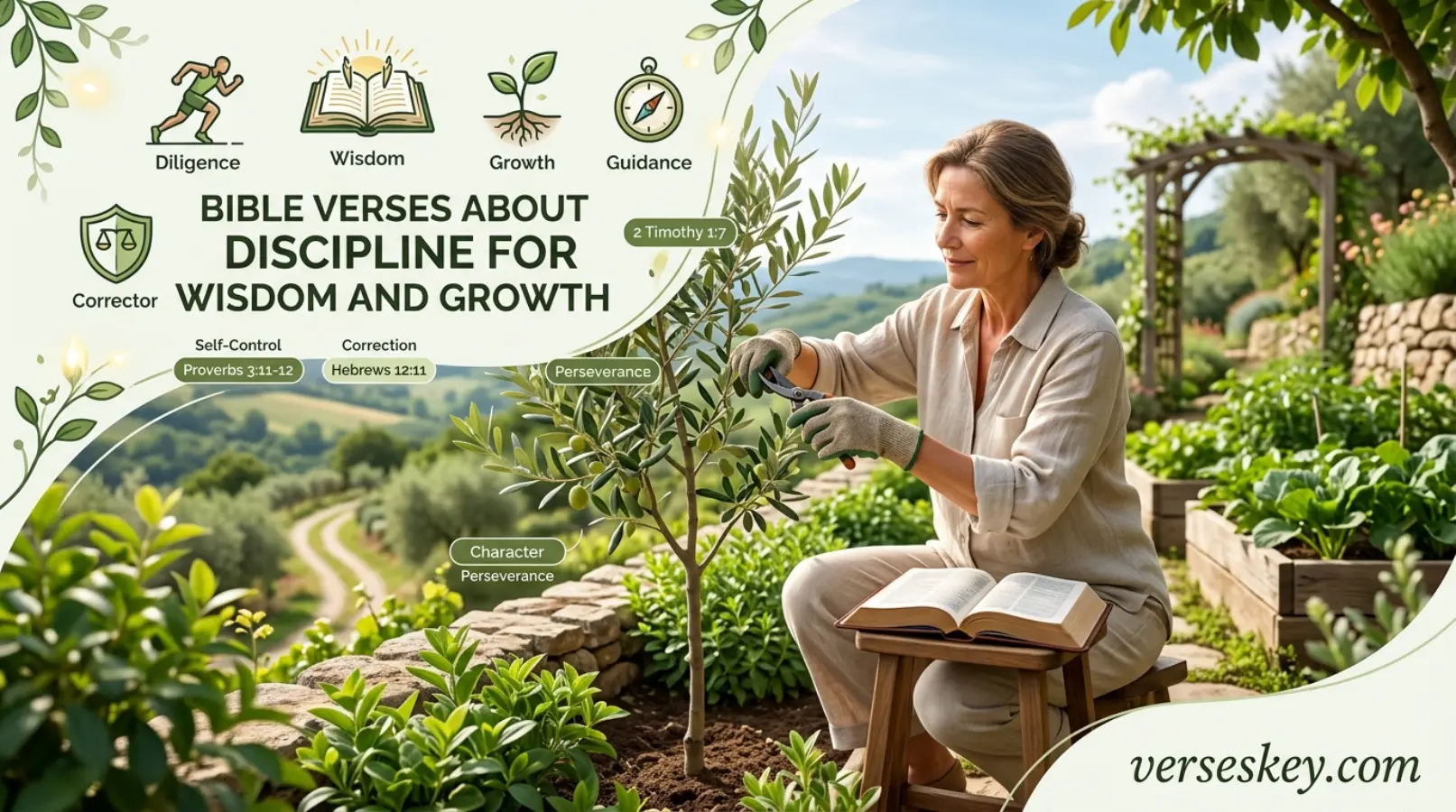
Bible Verses About Discipline for Wisdom and Growth offer timeless guidance for developing wisdom, patience, self-control, and godly character. These Scriptures show how loving correction and disciplined choices can strengthen faith and help us make wiser decisions.
Discover meaningful Bible verses that encourage discipline, perseverance, obedience, and spiritual growth through God’s Word. Let these Scriptures inspire you to embrace wise correction and grow stronger in faith each day.
Our easy-to-use copy option helps you save your favorite verses instantly, while the quick WhatsApp share button makes it simple to encourage friends and family with uplifting Scripture. Celebrate every step of spiritual growth by sharing a meaningful Bible verse today!
Quick Answer
Bible Verses About Discipline for Wisdom and Growth teach that godly discipline is more than correction. It is loving instruction that shapes character, builds wisdom, strengthens faith, and produces righteous living. Scripture encourages believers to receive correction humbly, practice self-control, remain faithful, and allow God to train their hearts for spiritual maturity.
Biblical Meaning of Bible Verses About Discipline for Wisdom and Growth
The biblical idea of discipline includes instruction, correction, training, and moral formation. The Hebrew word musar (מוּסָר) can mean discipline, correction, instruction, chastening, or reproof. Its first occurrence as a noun is in Deuteronomy 11:2, where Moses speaks about Israel experiencing the Lord’s mighty works and the formative discipline of God. (Bible Hub)
Proverbs brings this idea directly into the pursuit of wisdom: “Whoever loves discipline loves knowledge” (Proverbs 12:1). (Bible Gateway)
The biblical meaning therefore goes deeper than receiving punishment for wrongdoing. Discipline trains the heart to recognize truth, accept correction, develop self-control, and choose what is right.
In the New Testament, Hebrews uses the Greek word paideia, describing God’s fatherly training. Hebrews 12:11 explains that discipline may be painful at first, but it can produce “a harvest of righteousness and peace” in those trained by it. (Bible Gateway)
The spiritual lesson is clear: correction can become a pathway to wisdom when received with humility. Godly discipline teaches believers to listen, repent, persevere, and grow.
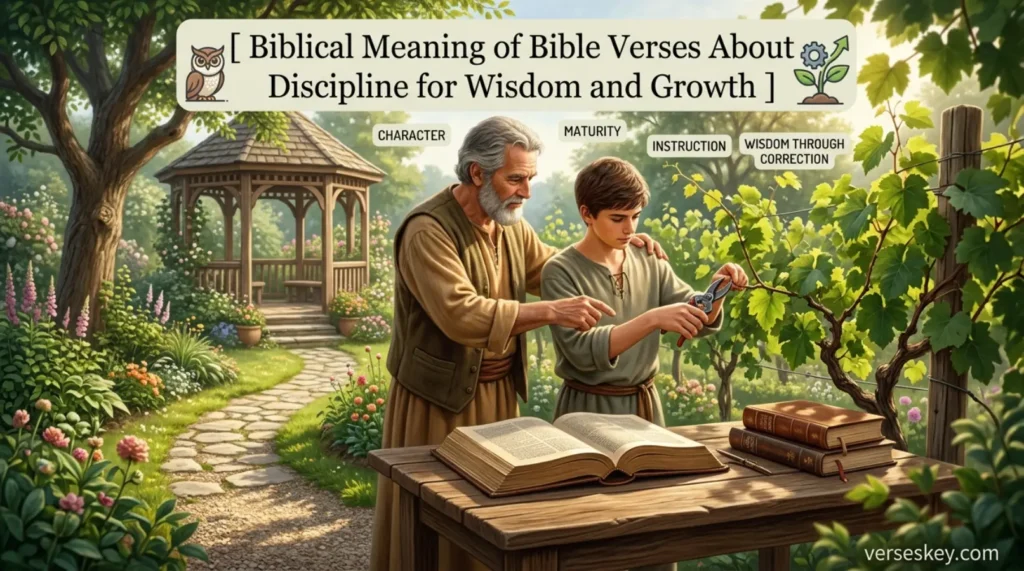
Spiritual Significance and Symbolism
The spiritual significance of discipline is closely connected with transformation. Scripture portrays God’s correction as the work of a loving Father who wants His children to become spiritually mature.
Discipline can symbolize a path of formation. Just as an athlete trains repeatedly to become stronger, a believer develops spiritual strength through prayer, obedience, Scripture, repentance, and faithful choices.
Discipline also symbolizes wisdom received through correction. A teachable heart does not automatically assume that every correction is an insult. Instead, it pauses, examines the lesson, and asks what God may be teaching through it.
Family life is another important area. Proverbs repeatedly connects parental instruction with wisdom and character. Proverbs 29:17 emphasizes the positive results of loving discipline in the home. (Bible Gateway)
Healthy biblical discipline should never become cruelty, humiliation, uncontrolled anger, or abuse. Its purpose is restoration, wisdom, responsibility, and godly character.
Across generations, disciplined faith can become a spiritual inheritance. Parents who pray, model self-control, admit mistakes, and teach God’s Word help children see that faith is not merely something spoken about—it is something practiced.
Biblical Interpretations in Dreams or Real Life
Encountering themes of discipline in prayer, dreams, personal reflection, or everyday circumstances can serve as a gentle invitation to examine your spiritual life. Scripture encourages believers to test their thoughts and choices against God’s Word rather than treating every dream or experience as a direct message from God.
A dream involving training, correction, instruction, or preparation may encourage you to consider areas where greater patience, wisdom, obedience, or self-control could be helpful. Such an interpretation should remain humble and Scripture-centered rather than becoming a prediction about the future.
A difficult season can also become an opportunity for spiritual reflection. You might ask, “What is this experience teaching me?” or “Is there an area where God is calling me to grow?”
Hebrews 12 presents discipline as training that can eventually produce righteousness and peace. (Bible Gateway)
The safest biblical approach is to seek God’s wisdom through Scripture, prayer, mature Christian counsel, and careful discernment.
A reminder about discipline should therefore lead toward hope rather than fear. God’s correction is not evidence that He has abandoned His people. Scripture presents divine discipline within the relationship of a loving Father and His children.
Bible Verses About Discipline for Wisdom and Growth
Scripture offers many passages that connect discipline with wisdom, correction, righteousness, and spiritual maturity.
- Proverbs 12:1 — “Whoever loves discipline loves knowledge.” This verse teaches that teachability is essential to wisdom. (Bible Gateway)
- Proverbs 3:11–12 — God’s discipline is connected with His love and fatherly care.
- Proverbs 13:1 — A wise child listens to instruction, while a scoffer refuses correction.
- Proverbs 15:31–32 — Listening to correction is associated with wisdom and understanding.
- Proverbs 19:20 — Scripture encourages people to listen to advice and accept instruction so they may become wise.
- Proverbs 22:15 — The passage recognizes the need for correction and guidance during childhood.
- Proverbs 29:17 — Loving parental discipline is connected with peace and joy in family life. (Bible Gateway)
- Hebrews 12:11 — Discipline can produce righteousness and peace when a person is trained by it. (Bible Gateway)
- Revelation 3:19 — Jesus connects loving correction with repentance and renewed commitment.
- 2 Timothy 3:16–17 — Scripture equips God’s people for teaching, correction, training, and righteous living.
Together, these passages show that biblical discipline is part of a larger process of becoming wise, faithful, and spiritually mature.
Practical Lessons & Faith Insights
- Trust God in daily decisions: Discipline begins with choosing God’s wisdom over impulsive desires.
- Stay faithful in quiet seasons: Spiritual growth often happens when nobody is watching. Keep praying, reading Scripture, and doing what is right.
- Pray consistently with your family: Family prayer creates opportunities to teach children dependence on God and gratitude for His guidance.
- Build habits of daily devotion: Regular time in God’s Word helps train the mind to recognize truth and reject destructive patterns.
- Receive correction humbly: A loving correction can reveal something that pride might otherwise hide.
- Practice self-control: Biblical discipline includes learning to govern words, emotions, desires, spending, time, and behavior.
- Encourage and serve others: Mature believers use their strength to help others grow rather than constantly seeking personal recognition.
- Learn from failure: A mistake does not have to become your identity. Repent, learn, make wise changes, and continue walking with God.
- Teach through example: Children often remember what they see more than what they hear.
- Persevere in obedience: Discipline becomes powerful when faithful choices continue even when immediate results are invisible.
How This Biblical Meaning Applies Today
Modern life constantly rewards speed, convenience, and instant gratification. Biblical discipline offers a different path: slow, intentional growth shaped by wisdom and faith.
For personal growth, discipline may mean creating healthier boundaries, controlling your reactions, managing your time wisely, and making decisions according to biblical principles instead of temporary emotions.
In marriage, discipline can appear through patient communication, forgiveness, listening, and refusing to use hurtful words during conflict. Love becomes stronger when both people learn to control pride and seek peace.
Family life also benefits from consistent and compassionate guidance. Parents can teach responsibility while showing grace, correction while showing affection, and boundaries while maintaining trust. Biblical discipline should guide children toward wisdom rather than merely controlling their behavior.
Relationships require similar maturity. A disciplined Christian learns when to speak, when to listen, when to forgive, and when to establish appropriate boundaries.
Spiritually, daily discipline can include prayer, Scripture reading, worship, repentance, generosity, service, and fellowship with other believers.
The goal is not religious performance. The goal is a transformed life. Every small act of faithful obedience can help shape habits, character, and spiritual resilience.
Why Discipline Is Connected With Wisdom
Wisdom in Scripture is more than having information. It involves knowing what is right and living accordingly. Discipline helps bridge the distance between knowing truth and practicing truth.
A person may understand that patience is valuable yet still need discipline to practice patience during stressful moments. Someone may know the importance of prayer but need consistent habits to make prayer part of daily life.
Proverbs repeatedly presents correction as a doorway to wisdom. The person who accepts instruction becomes teachable, while the person who continually rejects correction can remain trapped in foolish patterns.
This principle also explains why discipline can feel uncomfortable. Growth often challenges habits that feel familiar. Correction exposes attitudes we might prefer to ignore.
Yet discomfort does not automatically mean something is wrong. Hebrews teaches that God’s training can eventually produce righteousness and peace. (Bible Gateway)
Biblical discipline therefore asks believers to value long-term transformation over short-term comfort.
Wisdom grows when truth is heard, correction is accepted, and obedience becomes a way of life.
God’s Discipline and His Love
One of the most comforting biblical truths about discipline is that God’s correction is presented within His love. Proverbs 3:11–12 connects the Lord’s discipline with the relationship between a father and a beloved child.
This does not mean every painful event should automatically be interpreted as God’s punishment. Scripture does not give believers permission to label every hardship as divine discipline. Some suffering comes from living in a broken world, human choices, injustice, or circumstances beyond our control.
Instead, biblical discipline describes God’s formative work that turns His people toward wisdom and righteousness.
The image of a loving Father changes how correction is understood. God does not correct because He enjoys seeing His children suffer. His purpose is ultimately their good.
That truth can bring hope to someone who recognizes a destructive habit, receives needed correction, or realizes that change is necessary.
Repentance then becomes more than feeling guilty. It becomes an opportunity to return to God, receive grace, and walk in a wiser direction.
Christian growth is not powered by fear alone. It is sustained by God’s love, grace, truth, and the transforming work of the Holy Spirit.
Discipline, Self-Control, and Spiritual Growth
Self-control is one of the practical expressions of biblical discipline. Spiritual maturity becomes visible when believers learn to govern their responses instead of being controlled by every emotion or desire.
Discipline can help someone pause before speaking harshly, pray before making a major decision, resist temptation, keep commitments, and remain faithful when motivation disappears.
The Christian life requires this kind of steady formation. Scripture repeatedly calls believers to put away destructive behaviors and develop qualities that reflect Christ.
This does not mean relying solely on human strength. Christian discipline works alongside dependence on God’s grace. Believers pray for strength, study Scripture for wisdom, depend on the Holy Spirit, and practice obedience in everyday circumstances.
Small choices matter. Choosing honesty when lying would be easier, forgiveness when resentment feels justified, prayer when anxiety rises, or patience when anger grows can gradually shape character.
Spiritual growth often looks ordinary from the outside. It may happen through repeated prayers, quiet obedience, consistent service, and faithful choices that receive little public attention.
Over time, these practices can produce deeper stability.
Discipline is not merely something believers endure; it is one of the ways God trains them to live with wisdom, holiness, endurance, and love.

Frequently Asked Questions (FAQ)
What does Bible Verses About Discipline for Wisdom and Growth mean in the Bible?
Bible Verses About Discipline for Wisdom and Growth describe discipline as instruction, correction, training, and spiritual formation. Scripture connects receiving correction with gaining wisdom and developing righteous character.
What is the spiritual meaning of discipline?
The spiritual meaning of discipline is the process of being trained toward godly character. It can involve correction, self-control, obedience, perseverance, and learning to follow God’s wisdom.
Why is discipline important in Christianity?
Discipline is important because Christian maturity requires more than knowing biblical truth. Believers are called to practice truth through obedience, self-control, repentance, prayer, service, and faithful living.
What Bible verse talks about discipline?
Proverbs 12:1 directly connects discipline with knowledge: “Whoever loves discipline loves knowledge.” Hebrews 12:11 also teaches that discipline can produce righteousness and peace. (Bible Gateway)
Does God discipline His children?
Yes, Scripture describes God’s discipline as part of His fatherly relationship with His people. Proverbs 3:11–12 presents divine correction in connection with God’s love and care.
Is biblical discipline the same as punishment?
No. Biblical discipline can include correction or chastening, but its broader meaning involves instruction and training. Its purpose is often restoration, wisdom, character formation, and righteousness.
How can I practice biblical discipline every day?
You can practice it by praying consistently, studying Scripture, accepting wise correction, controlling your words and reactions, keeping faithful commitments, resisting temptation, and serving others.
How does discipline help spiritual growth?
Discipline creates habits that support spiritual maturity. Through repeated obedience, prayer, Scripture, repentance, and self-control, believers learn to reflect Christ more consistently in everyday life.
Conclusion
Bible Verses About Discipline for Wisdom and Growth reveal a powerful biblical truth: meaningful spiritual growth requires a teachable heart. Scripture presents discipline not merely as correction but as loving instruction that forms wisdom, self-control, righteousness, perseverance, and maturity.
From the Hebrew concept of musar to the New Testament picture of God’s fatherly training, the biblical message remains consistent. God desires His people to grow. Proverbs teaches believers to love instruction, while Hebrews reminds them that faithful training can produce a harvest of righteousness and peace. (Bible Gateway)
Discipline may not always feel comfortable, but it can become one of the most valuable pathways toward a stronger faith. The correction you receive today may help protect your character tomorrow. The habit you build quietly may strengthen your family for years. The prayer you repeat faithfully may shape your heart in ways you cannot yet see.
Let God’s Word teach you, His correction refine you, His grace strengthen you, and His wisdom guide every step.
If these Bible Verses About Discipline for Wisdom and Growth encouraged your faith, share this message with someone who may need a reminder that spiritual growth is worth the faithful work of becoming more like Christ.

I am Grace Willow passionate about sharing the wisdom and comfort of Scripture. Through my writing, I explore faith, hope, and the timeless lessons of the Bible. I aim to bring God’s Word to life in ways that inspire and guide daily living. My verses and reflections seek to encourage, uplift, and strengthen readers’ faith. For me, writing about Scripture is a way to connect hearts to God’s love.