Bible Verses About Lying and Honest Living reveal God’s heart for truth, integrity, and faithful character. These powerful scriptures encourage honest living and warn against the spiritual dangers of deception.
Explore the latest Bible Verses About Lying and Honest Living for personal study, devotion, or daily encouragement. Every verse includes meaningful insight to strengthen your faith and inspire truthful living.
Use our simple copy option to save your favourite Bible verses instantly, and share them with friends and family using the quick WhatsApp share button in just one tap. Let God’s Word guide your heart toward honesty, trust, and a life that honours Him every day.
Quick Answer:
Bible Verses About Lying and Honest Living reveal God’s desire for truth, integrity, and trustworthy character. Scripture consistently teaches that honesty reflects God’s nature, while lying damages relationships, weakens faith, and separates people from His purpose. Through biblical wisdom, Christians learn to speak truth with love and live lives that honour God.
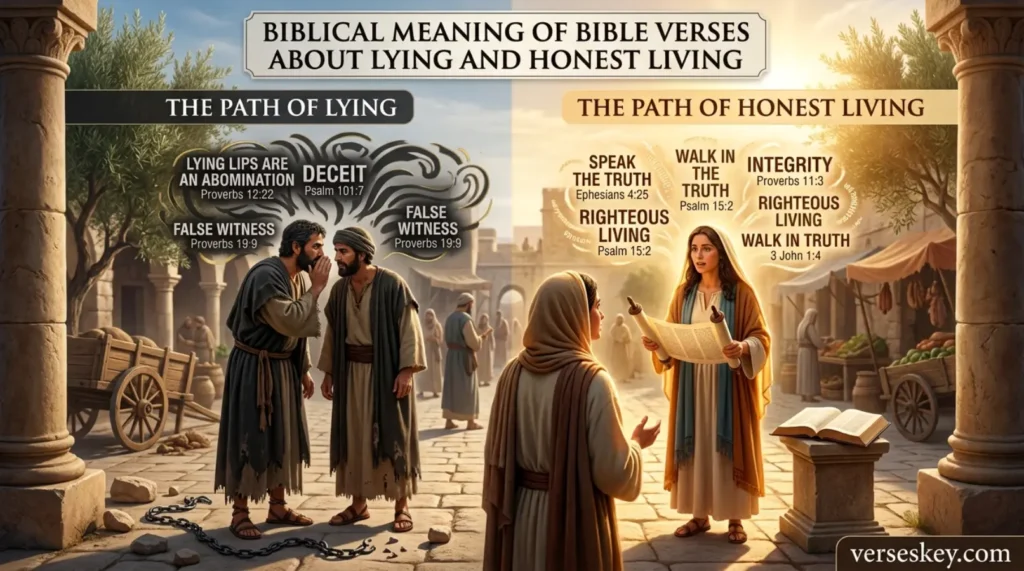
Biblical Meaning of Bible Verses About Lying and Honest Living
The biblical meaning of truth begins with God’s own character. Scripture declares that God cannot lie because truth is part of His perfect nature. His promises are dependable, His words are trustworthy, and His faithfulness never fails.
One of the clearest commandments against lying appears in the Ten Commandments.
“You shall not give false testimony against your neighbour.” — Exodus 20:16
Although this command originally addressed false witness in legal matters, its principle reaches every area of life. God values honesty because truth protects justice, relationships, and human dignity.
The Hebrew word often connected with truth is “emet,” meaning firmness, reliability, faithfulness, and truthfulness. It describes something that can be trusted completely. God’s truth is not merely accurate information; it is dependable reality that never changes.
In the New Testament, the Greek word “aletheia” means truth, sincerity, and openness. Jesus used this word frequently as He taught His followers to walk in God’s truth.
Jesus declared:
“I am the way and the truth and the life.” — John 14:6
This statement reveals that truth is not only a principle but is perfectly demonstrated in Christ Himself. Christians pursue honesty because they desire to become more like Jesus.
The Bible repeatedly warns about lying because deception originated with Satan, whom Jesus described as “the father of lies” (John 8:44). Falsehood leads people away from God’s wisdom, damages trust, and creates division among families and communities.
At the same time, Scripture offers hope. Anyone who has struggled with dishonesty can receive forgiveness through Christ. God transforms hearts so believers learn to speak with sincerity, kindness, and courage.
The deeper biblical interpretation reminds us that truthful living is evidence of spiritual maturity. Honesty becomes an act of worship because it reflects the character of the God we serve.
Top Bible Verses About Lying and Honest Living in Scripture
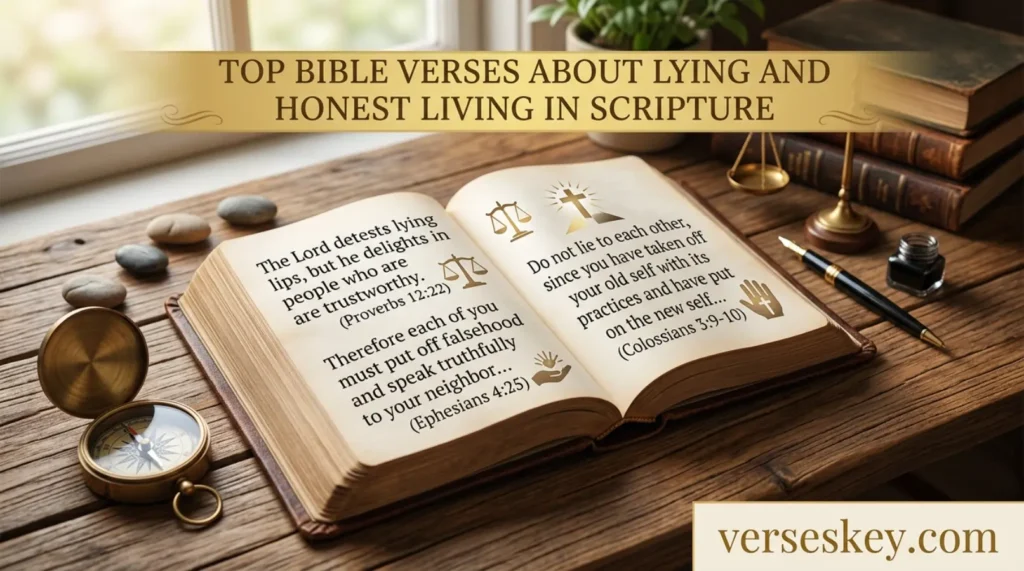
The Bible repeatedly encourages believers to reject deception and embrace honesty. These Scripture references reveal God’s heart for truthful living.
Proverbs 12:22
“The Lord detests lying lips, but he delights in people who are trustworthy.”
This verse highlights God’s love for faithful and dependable people. Trustworthiness pleases Him because it reflects His own nature.
Colossians 3:9–10
“Do not lie to each other, since you have taken off your old self with its practices and have put on the new self.”
Believers are called to leave behind sinful habits as they grow into Christ’s likeness.
Psalm 15:1–2
“Lord, who may dwell in your sacred tent? Who may live on your holy mountain? The one whose walk is blameless, who does what is righteous, who speaks the truth from their heart.”
Truth begins within the heart before it appears in our words.
Proverbs 19:1
“Better the poor whose walk is blameless than a fool whose lips are perverse.”
God values integrity above worldly success.
Zechariah 8:16
“Speak the truth to each other, and render true and sound judgment in your courts.”
Truth promotes justice, fairness, and peace within communities.
James 3:17
“The wisdom that comes from heaven is first of all pure; then peace-loving, considerate, submissive, full of mercy and good fruit, impartial and sincere.”
Heavenly wisdom produces sincere speech rather than deception.
1 Peter 3:10
“Whoever would love life and see good days must keep their tongue from evil and their lips from deceitful speech.”
Our words reveal the direction of our hearts and influence the quality of our relationships.
Spiritual Significance and Symbolism
Truth carries deep spiritual significance throughout Scripture because it represents God’s unchanging character. The Bible never presents honesty as merely good behaviour. Instead, truthful living reflects a transformed heart shaped by God’s grace.
Lying often symbolises spiritual darkness, hidden motives, and broken fellowship. Honest living symbolises light, openness, and faithful obedience.
When Christians choose honesty, they demonstrate confidence that God can work through truth rather than manipulation. Integrity becomes a visible expression of faith.
Truth also strengthens families. Parents who model honesty teach children that trust is valuable and worth protecting. Friendships become healthier when words are sincere and promises are kept.
Church communities flourish when believers communicate with humility and truth. Honest conversations encourage forgiveness, accountability, and lasting unity.
Spiritually, truthful living reminds believers that God sees every hidden thought. Nothing remains concealed from Him, yet His mercy invites sincere repentance rather than fear.
Living honestly also protects the conscience. Instead of carrying the burden of deception, believers experience the freedom that comes from walking openly before God.
Every truthful decision becomes an opportunity to honour Christ, even when honesty requires courage or sacrifice.
Examples of Honesty and Deception in the Bible
The Bible includes many real-life examples that reveal the consequences of lying and the blessings of truthful living.
Abraham and Sarah
Abraham twice described Sarah as his sister out of fear. Although God protected His promises, Abraham’s partial deception created unnecessary trouble. His story reminds believers that fear should never replace trust in God’s protection.
Jacob
Jacob deceived his father Isaac to receive Esau’s blessing. Although God’s greater plan continued, Jacob experienced years of conflict, separation, and hardship. His life illustrates how deception often produces painful consequences.
Rahab
Rahab protected the Israelite spies during a dangerous time. Christians have long discussed the ethical questions surrounding her actions. Scripture praises her faith in God rather than presenting deception as a general model for believers.
Ananias and Sapphira
Acts 5 records one of the strongest New Testament warnings against dishonesty. The couple pretended to give everything while secretly keeping part of the money. Peter explained that they had lied not only to people but to the Holy Spirit.
Jesus Christ
Jesus perfectly demonstrated truthful living. His words were always faithful, compassionate, and righteous. He spoke truth even when it led to rejection and suffering.
These biblical accounts show that God values integrity while offering grace to those who sincerely repent.
Biblical Interpretations in Dreams or Real Life
Some Christians wonder about the spiritual meaning of dreams involving lies, secrets, or truth. The Bible encourages wisdom and prayer rather than assigning fixed meanings to every dream.
A dream involving dishonesty may simply encourage personal reflection. It can become an opportunity to examine relationships, attitudes, or areas where greater honesty is needed.
Dreams about confessing the truth may remind believers of God’s invitation to live openly before Him.
If someone repeatedly reflects on lying during prayer, the Holy Spirit may gently encourage repentance, reconciliation, or renewed commitment to integrity.
Real-life situations often provide opportunities to practise honest living.
A difficult conversation may become a chance to speak truth with love.
A workplace challenge may require integrity even when dishonesty appears easier.
Family disagreements may invite believers to communicate patiently and honestly.
Rather than viewing every experience as a mysterious sign, Christians should compare every impression with Scripture, seek wise counsel, and pray for discernment.
God’s Word remains the clearest guide for truthful living.
Practical Lessons & Faith Insights
• Trust God in every circumstance. Honesty becomes easier when we believe God is our provider and protector.
• Speak the truth with love. Biblical honesty combines truthfulness with kindness and compassion.
• Confess quickly when you fail. Repentance restores fellowship with God and rebuilds damaged trust.
• Guard your words daily. Thoughtful speech prevents unnecessary conflict and misunderstanding.
• Keep your promises. Faithfulness in commitments demonstrates Christian integrity.
• Develop a truthful heart. Honest words begin with sincere thoughts and godly motives.
• Study Scripture consistently. God’s Word shapes character and teaches wisdom for everyday decisions.
• Pray for integrity. Ask the Holy Spirit to strengthen your commitment to truth.
• Encourage honesty in your family. Create an atmosphere where truth is welcomed rather than feared.
• Reflect Christ through your actions. Integrity is demonstrated by both words and behaviour.
How This Biblical Meaning Applies Today
Modern society often rewards exaggeration, image management, and personal gain. Yet the Christian meaning of truthful living remains unchanged.
Honesty builds strong marriages because trust becomes the foundation of lasting love.
Parents influence future generations when children consistently witness truthful behaviour at home.
Students honour God by completing their work honestly rather than cheating.
Employees demonstrate Christian witness by acting with integrity even when supervisors are absent.
Business leaders earn lasting respect by dealing fairly with customers and colleagues.
Church members strengthen unity when they communicate openly and graciously.
Social media also presents opportunities to practise biblical honesty. Sharing accurate information, avoiding gossip, and speaking respectfully reflect God’s wisdom in today’s digital world.
Personal spiritual growth also depends upon honesty before God. Genuine prayer includes truthful confession, sincere gratitude, and humble dependence upon His mercy.
Honest living does not mean harsh or careless speech. Scripture teaches believers to combine truth with love, grace, patience, and wisdom.
As Christians continue growing in faith, truthful words become evidence of hearts transformed by the Holy Spirit.
Frequently Asked Questions (FAQ)
What do Bible Verses About Lying and Honest Living mean?
They teach that God values truthfulness, integrity, and trustworthy character while warning against deception and dishonest speech.
What is the spiritual meaning of honest living?
Honest living reflects God’s character, strengthens relationships, develops spiritual maturity, and demonstrates genuine faith.
Why does the Bible speak strongly against lying?
Lying damages trust, creates division, promotes injustice, and contradicts God’s holy nature, which is perfectly truthful.
What Bible verse talks about honesty?
Proverbs 12:22, Ephesians 4:25, Colossians 3:9, Psalm 15:2, and Zechariah 8:16 are among the clearest passages encouraging honesty.
Can Christians receive forgiveness after lying?
Yes. Through sincere repentance and faith in Jesus Christ, God offers forgiveness, restoration, and strength to live differently.
How can I become more honest according to the Bible?
Spend time in prayer, study Scripture regularly, confess mistakes quickly, seek the Holy Spirit’s guidance, and practise truthful speech every day.
What does Jesus teach about truth?
Jesus declared Himself to be the truth and consistently taught His followers to live with honesty, integrity, humility, and love.
How does honest living strengthen faith?
Integrity builds trust in relationships, produces peace of conscience, reflects God’s presence, and allows believers to become faithful witnesses of Christ.
Conclusion
Bible Verses About Lying and Honest Living reveal that truth is far more than careful speech. It is a reflection of God’s holy character and an essential part of faithful Christian living. From the commandments given to Israel to the teachings of Jesus and the apostles, Scripture consistently encourages believers to reject deception and embrace integrity.
The biblical meaning of truthful living reminds us that honesty strengthens families, protects relationships, builds healthy communities, and deepens our fellowship with God. Every truthful word and faithful action becomes an opportunity to reflect Christ to a world searching for hope and authenticity.
No one lives perfectly, and everyone has experienced moments of failure. Yet God’s grace is always available to those who sincerely repent and desire to walk in His truth. As His Spirit transforms our hearts, our words begin to reflect His love, wisdom, and faithfulness.
May these Bible Verses About Lying and Honest Living inspire you to choose truth each day, trust God’s guidance in every situation, and become a person whose integrity points others toward the unchanging faithfulness of the Lord.

I am Grace Willow passionate about sharing the wisdom and comfort of Scripture. Through my writing, I explore faith, hope, and the timeless lessons of the Bible. I aim to bring God’s Word to life in ways that inspire and guide daily living. My verses and reflections seek to encourage, uplift, and strengthen readers’ faith. For me, writing about Scripture is a way to connect hearts to God’s love.