Bible Verses Against Abortion and the Sanctity of Life reveal God’s deep love for every human life from the very beginning. Explore carefully selected scriptures that highlight the value, dignity, and sacredness of life through biblical truth and compassion.
Each verse is easy to read, understand, and reflect on for personal study, teaching, or meaningful faith discussions. Use the Copy button to save your favorite Bible verses instantly.
Share God’s life-affirming Word with family and friends using the Quick Share to WhatsApp button. Let these powerful Bible verses strengthen your faith and deepen your respect for the sanctity of every life.
Quick Answer:
The Bible does not mention abortion by name, but it consistently teaches the sanctity of human life. Scripture reveals that God forms every person in the womb, values each life, and calls believers to honor His gift of life with love, compassion, truth, and grace.
Biblical Meaning of Bible Verses Against Abortion and the Sanctity
The biblical meaning of the sanctity of life begins with God’s identity as Creator. Human life is never presented as an accident but as the intentional work of God’s hands. From conception to natural death, Scripture consistently teaches that life belongs to Him.
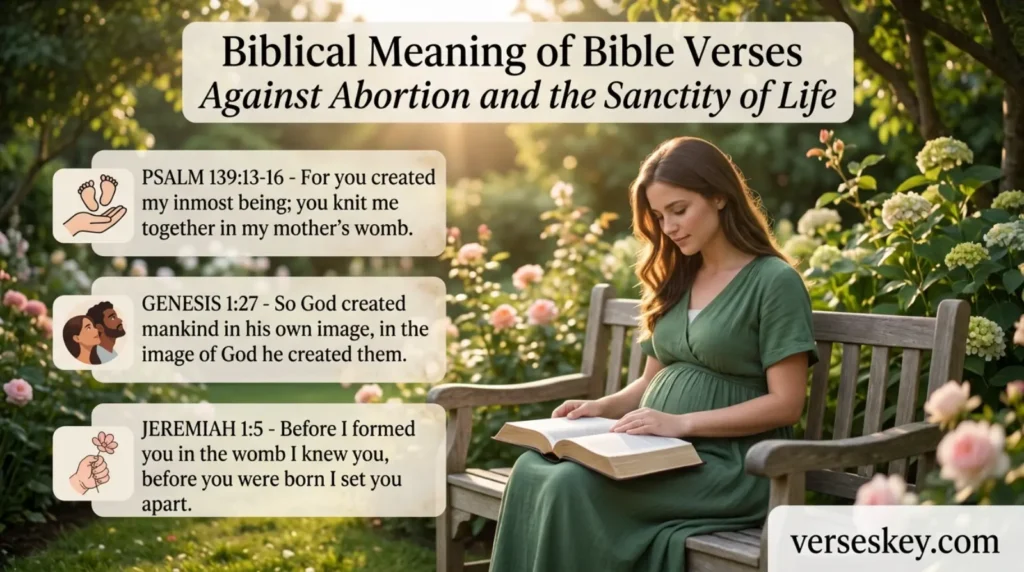
One of the clearest passages appears in Psalm 139.
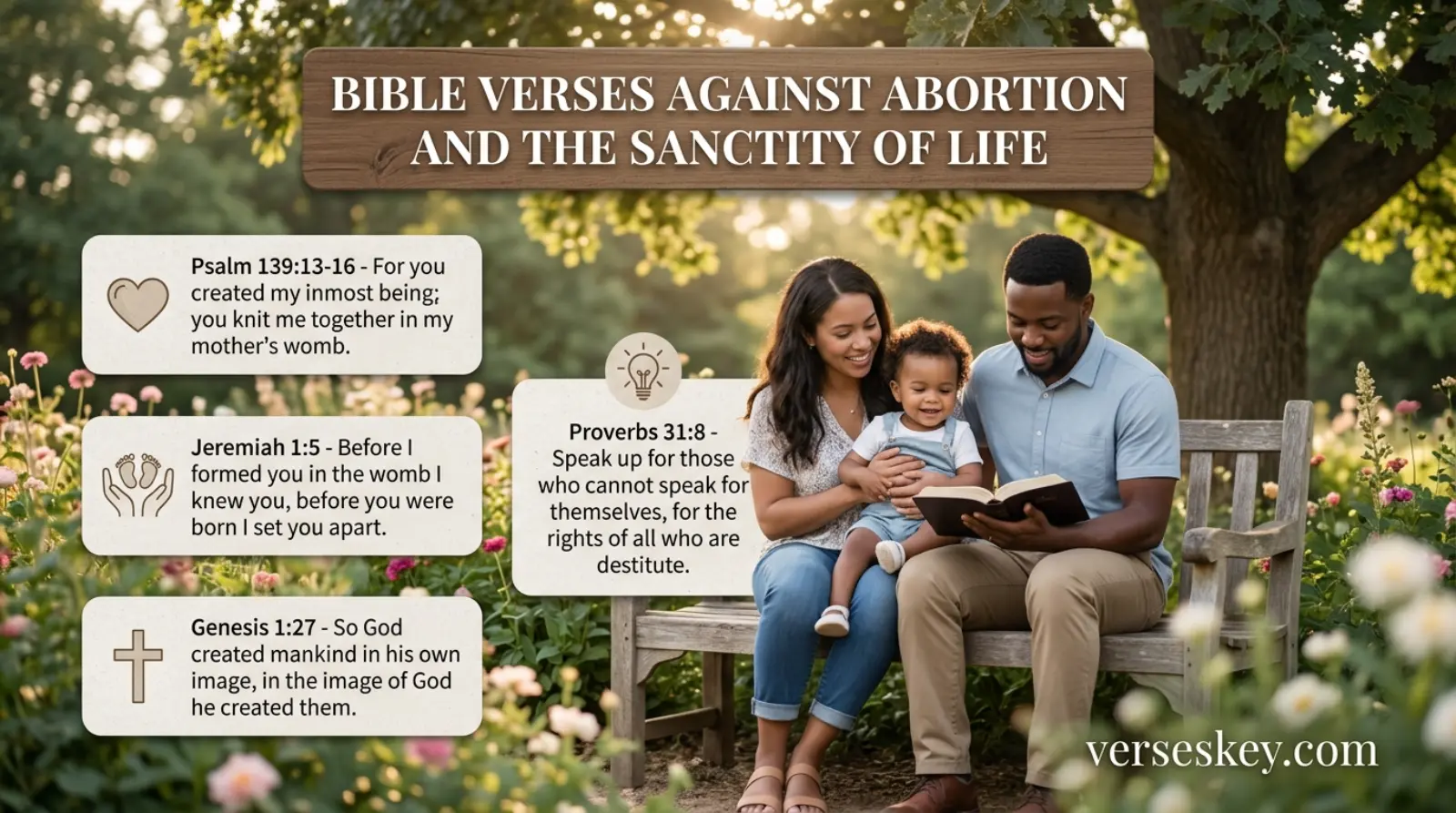
“For you created my inmost being; you knit me together in my mother’s womb.” (Psalm 139:13)
These Bible Verses Against Abortion reveal God’s personal involvement in forming every child before birth. The Hebrew imagery of “knitting together” describes careful craftsmanship rather than random development. It reflects God’s loving attention to every detail of human life.
Biblical Meaning of Bible Verses Against Abortion and the Sanctity of Life
Another foundational passage is found in Jeremiah.
“Before I formed you in the womb I knew you, before you were born I set you apart.” (Jeremiah 1:5)
Although this verse specifically describes Jeremiah’s prophetic calling, it demonstrates God’s knowledge and purpose before birth. It reminds believers that God’s relationship with people begins long before they enter the world.
Genesis also provides essential biblical interpretation.
“So God created mankind in his own image.” (Genesis 1:27)
Being created in God’s image gives every person inherent worth. Human value does not depend on age, ability, health, or achievements. Every life reflects God’s creative work.
The New Testament continues this understanding. When Mary visited Elizabeth, the unborn John the Baptist responded joyfully in the womb.
“The baby leaped in her womb.” (Luke 1:41)
This account highlights the humanity of the unborn child and God’s active work before birth.
Together, these Scripture references build a consistent biblical foundation. The Bible does not directly discuss abortion, but it repeatedly affirms that God values unborn life as precious. The Christian meaning centers on God’s authority as Creator, humanity’s value as His image-bearers, and His loving purposes for every life.
These passages also invite believers to approach difficult conversations with humility, wisdom, and compassion. God’s truth is always accompanied by His mercy.
Spiritual Significance and Symbolism
The spiritual significance of life begins with God’s character. He is the Author of life, the Giver of breath, and the One who sustains every human being. Every heartbeat reflects His creative power and loving care.
The womb carries rich biblical symbolism. It represents not only physical development but also God’s hidden work. Just as seeds grow beneath the soil before becoming visible, God’s purposes often begin long before others can see them.
Scripture teaches that every child has value because every person bears God’s image. This truth shapes how Christians view children, families, communities, and society. Respect for life grows from respect for the Creator Himself.
The sanctity of life also reminds believers that every individual has unique gifts and a God-given calling. God connected several biblical figures, including Jeremiah, John the Baptist, Samson, and Jesus, to His special plans before their birth. These examples demonstrate God’s sovereignty rather than human control.
Faith lessons from these passages encourage Christians to protect the vulnerable, show compassion to those facing difficult circumstances, and trust God’s wisdom even during challenging seasons. Love for life includes caring for mothers, fathers, children, families, and those carrying emotional pain from past decisions.
God’s people are called to speak truth with gentleness and extend grace without compromising biblical convictions.
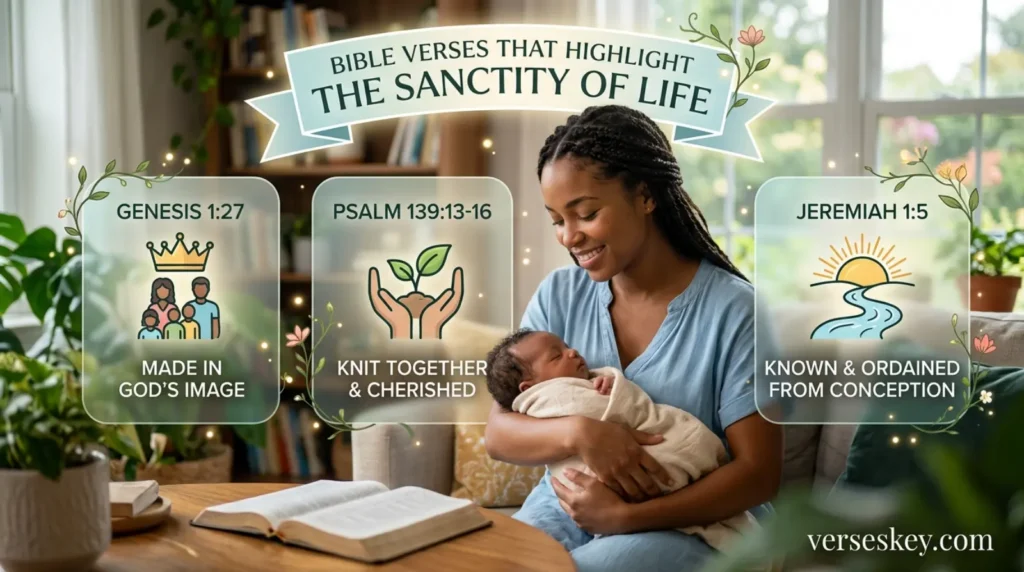
Bible Verses That Highlight the Sanctity of Life
Several passages help Christians understand God’s view of human life.
Psalm 139:13–16
David praises God for forming him in the womb and knowing every detail of his life. These verses celebrate God’s intimate involvement in creation.
Jeremiah 1:5
God declares His knowledge of Jeremiah before birth, showing His sovereign purpose and personal relationship.
Genesis 1:26–27
Human beings are created in God’s image, giving every life unique dignity and value.
Exodus 20:13
“You shall not murder.”
This command reflects God’s respect for human life and His desire for people to honor one another.
Luke 1:39–45
John the Baptist responds to Jesus while both are still in their mothers’ wombs, revealing God’s activity before birth.
Isaiah 44:24
God describes Himself as the One who formed His people in the womb, emphasizing His creative authority.
Together, these Scripture references form a strong biblical understanding that life is God’s gift and deserves honor.
Biblical Interpretations in Dreams or Real Life
People sometimes dream about babies, pregnancy, children, or unborn life. The Bible Verses Against Abortion does not provide fixed meanings for every dream, so Christians should avoid claiming absolute interpretations.
A dream involving new life may encourage reflection on God’s creative work, personal responsibility, or spiritual growth. It can remind believers that God continues shaping His people according to His purpose.
During prayer, Christians may feel led to reflect on the value of life, compassion for families, or care for vulnerable people. Such moments should always be tested through Scripture rather than personal feelings alone.
In daily life, encounters with children, expectant parents, or stories about birth may become opportunities to remember God’s goodness and thank Him for the gift of life.
For someone struggling with guilt or grief, biblical reflection points toward God’s forgiveness through Jesus Christ. Scripture teaches that repentance brings hope and restoration rather than endless condemnation.
Faith-based interpretation should always lead people closer to God’s truth, deeper trust in His grace, and greater love for others.
Practical Lessons & Faith Insights
- Trust God’s design for life. Remember that every human life has value because God is its Creator.
- Pray for wisdom. Ask God to guide difficult conversations with love, humility, and biblical truth.
- Show compassion. Support women, families, and children with practical care and genuine kindness.
- Study Scripture regularly. Build convictions from God’s Word instead of cultural opinions alone.
- Protect the vulnerable. Follow Christ by caring for those who cannot defend themselves.
- Encourage hope. Share the message of God’s forgiveness with anyone carrying regret or sorrow.
- Practice mercy. Speak truth without harshness, reflecting the compassion Jesus showed throughout His ministry.
- Support families. Welcome, love, and nurture children to encourage healthy homes.
- Value every stage of life. Honor people from the womb through old age because each person reflects God’s image.
- Grow spiritually. Allow biblical insights about life to deepen gratitude, worship, and obedience to God.
How This Biblical Meaning Applies Today
Modern Christians live in a world filled with complex ethical questions. The Bible Verses Against Abortion meaning of the sanctity of life continues to provide clear spiritual direction by reminding believers that God alone is the Author of life.
Families can apply these truths by teaching children that every person has dignity and deserves respect. Churches can become places where expectant mothers receive encouragement, struggling parents find practical support, and hurting individuals experience God’s grace.
Personal spiritual growth also comes from recognizing God’s care for every human life. Knowing that God formed each person with purpose encourages gratitude, humility, and greater trust in His plans.
Relationships become stronger when believers honor one another as image-bearers of God. This perspective promotes kindness, patience, forgiveness, and compassion in everyday interactions.
God also calls Christians to uphold truth and show mercy.
Defending the sanctity of life should always be accompanied by love, practical support, prayer, and a willingness to help those facing difficult circumstances.
The gospel reminds believers that while God’s standards are holy, His grace is available to everyone who turns to Him. Through Jesus Christ, forgiveness, healing, and new beginnings remain possible for every person.
Frequently Asked Questions (FAQ)
What do Bible verses against abortion and the sanctity of life mean?
These verses emphasize that God creates every human life and gives each person value because He made them in His image. Although Scripture does not mention abortion by name, it consistently honors the dignity of unborn life.
What is the spiritual meaning of the sanctity of life?
The spiritual meaning is that life is a sacred gift from God. God creates every human being with purpose, knows each person, and calls everyone worthy of love, respect, and care.
Why is the sanctity of life important in Christianity?
It reflects God’s character as Creator and teaches believers to value every person equally. This belief shapes Christian ethics, compassion, and responsibility toward others.
What Bible verse talks about God forming a baby in the womb?
Psalm 139:13–16 is one of the best-known passages describing God’s work in forming a child before birth. Jeremiah 1:5 also highlights God’s knowledge and purpose before birth.
Does the Bible directly mention abortion?
The Bible does not directly address abortion by name. Christians generally form their understanding from broader biblical teachings about God’s creation of life, the value of every person, and respect for human dignity.
What can Christians learn from these Bible verses?
Believers learn to honor God’s gift of life, trust His wisdom, care for vulnerable people, extend compassion, and share God’s grace with those who need healing and hope.
How should Christians discuss abortion with others?
Christians should speak with biblical truth, humility, compassion, and respect. Conversations should reflect both God’s holiness and His mercy while avoiding judgmental attitudes.
Is there forgiveness for someone who regrets a past abortion?
Yes. The Bible teaches that God’s forgiveness is available through faith in Jesus Christ for everyone who sincerely repents. His grace offers healing, restoration, and hope for the future.
Conclusion
The Bible presents a consistent message about the sanctity of life. From the first pages of Genesis to the teachings of the New Testament, Scripture reveals that God creates every person with purpose, dignity, and love. Although the Bible does not directly mention abortion by name, its biblical meaning clearly affirms the value of unborn life and God’s intimate involvement in human creation.
These Bible verses against abortion and the sanctity of life invite believers to cherish every human life while reflecting God’s compassion toward those facing difficult circumstances. The Christian meaning is not only about defending life but also about demonstrating mercy, offering support, and pointing people toward the hope found in Jesus Christ.
As you reflect on these Scripture references and faith lessons, remember that every life is precious in God’s sight. His truth calls us to honor life, His love invites us to care for others, and His grace offers forgiveness, healing, and renewed purpose to all who seek Him with sincere hearts.

I am Grace Willow passionate about sharing the wisdom and comfort of Scripture. Through my writing, I explore faith, hope, and the timeless lessons of the Bible. I aim to bring God’s Word to life in ways that inspire and guide daily living. My verses and reflections seek to encourage, uplift, and strengthen readers’ faith. For me, writing about Scripture is a way to connect hearts to God’s love.