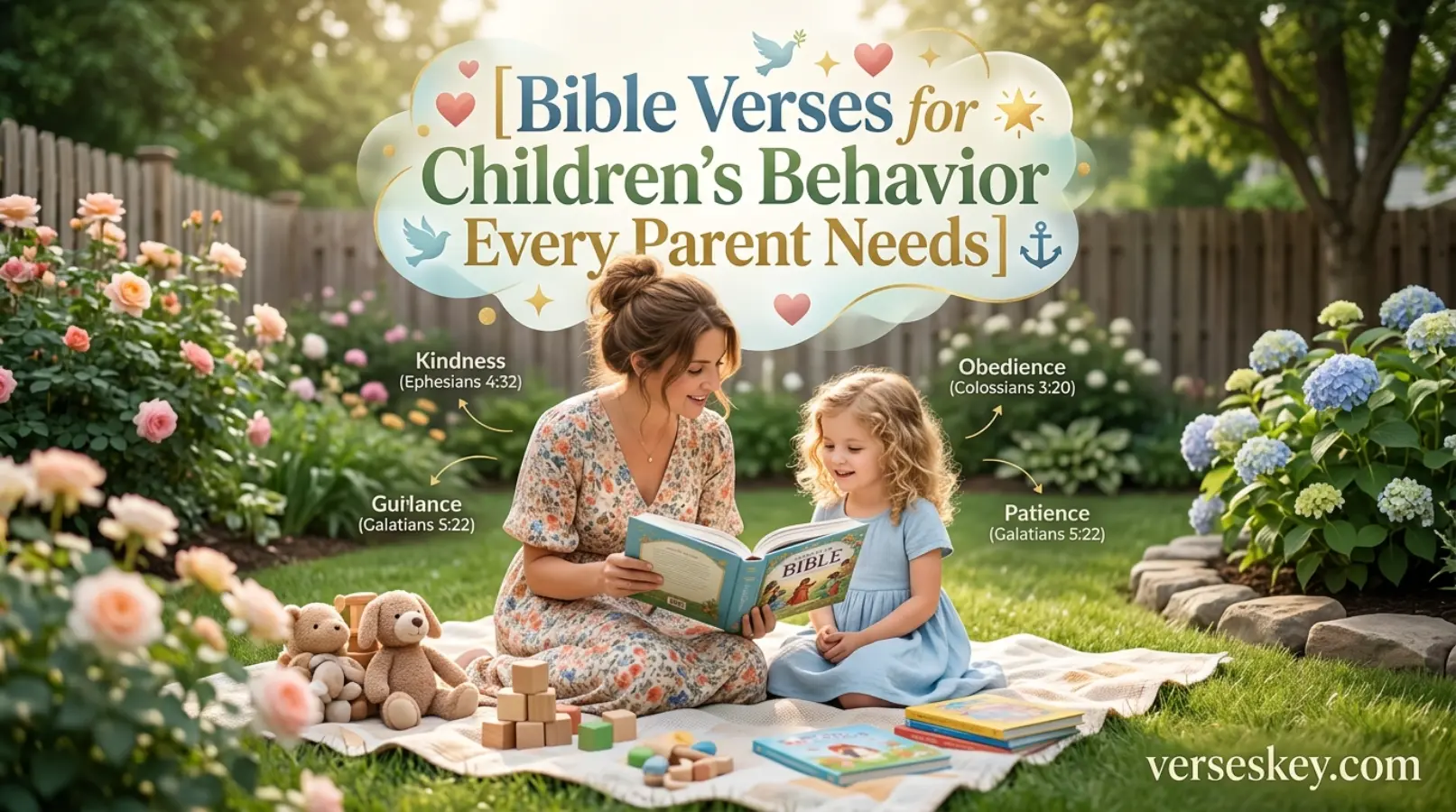
Bible Verses for Children’s Behavior Every Parent Needs help parents guide young hearts with God’s timeless wisdom and loving instruction. Discover carefully selected Bible Verses for Children’s Behavior Every Parent Needs to encourage kindness, respect, obedience, patience, and self-control.
Every verse is easy to read, understand, and share with children during daily family devotions or meaningful conversations. Use our simple Copy button to save your favorite Bible verses in seconds.
Share God’s Word instantly with the Quick Share to WhatsApp button and encourage other families. Celebrate your child’s spiritual growth today with the perfect Bible verse for every stage of learning and character development.
Quick Answer
Bible Verses for Children’s Behavior Every Parent Needs provide biblical guidance for raising respectful, kind, obedient, and compassionate children. These carefully chosen scriptures help parents teach godly character, encourage positive behavior, strengthen family relationships, and build a strong spiritual foundation rooted in God’s Word.
Biblical Meaning of Bible Verses for Children’s Behavior Every Parent Needs
The Bible does not present children’s behavior as simply a matter of discipline. Instead, Scripture describes it as part of growing in wisdom, honoring God, and loving others. From the Old Testament through the New Testament, God instructs parents to teach His commands diligently to their children.
One of the foundational passages appears in Deuteronomy 6:6–7, where God says:
“These commandments that I give you today are to be on your hearts. Impress them on your children.”
This instruction was originally given to Israel before entering the Promised Land. Parents were called to teach God’s truth throughout daily life rather than only during formal worship.
Another key passage is Proverbs 22:6:
“Train up a child in the way he should go, and when he is old he will not depart from it.”
The Hebrew word translated as “train” carries the idea of dedicating, guiding, and initiating someone onto the right path. It reflects intentional spiritual formation instead of occasional correction.
The New Testament continues this teaching. Ephesians 6:1 says:
“Children, obey your parents in the Lord, for this is right.”
The Greek word for “obey” means listening attentively and responding with willing submission. It points toward respect that flows from a heart devoted to God.
These verses reveal that biblical behavior begins with inward transformation. Parents are encouraged to nurture faith, while children learn that obedience, kindness, honesty, and self-control honor the Lord.
The deeper biblical interpretation reminds believers that raising children is a sacred responsibility. Every conversation, correction, and encouragement becomes an opportunity to reflect God’s patience and grace.

Bible Verses for Children’s Behavior Every Parent Needs
God’s Word provides practical wisdom for teaching children how to live with integrity and compassion.
Teach Obedience
Ephesians 6:1–3
“Children, obey your parents in the Lord, for this is right.”
Obedience builds trust, responsibility, and respect within the family. Children who learn to honor their parents also grow in their understanding of honoring God.
Encourage Kindness
Ephesians 4:32
“Be kind and compassionate to one another, forgiving each other, just as in Christ God forgave you.”
Kindness reflects the character of Christ. Parents can use this verse to teach children how to treat siblings, classmates, and friends with love.
Speak with Gentle Words
Proverbs 15:1
“A gentle answer turns away wrath, but a harsh word stirs up anger.”
Children benefit from learning that their words have power to heal or hurt. Gentle speech strengthens relationships and reduces conflict.
Tell the Truth
Proverbs 12:22
“The Lord detests lying lips, but he delights in people who are trustworthy.”
Honesty develops strong character and builds lasting trust with others.
Practice Self-Control
Galatians 5:22–23
“The fruit of the Spirit is love, joy, peace, patience, kindness, goodness, faithfulness, gentleness and self-control.”
Self-control helps children make wise choices even when emotions are strong.
Love Others
Mark 12:31
“Love your neighbor as yourself.”
Jesus taught that loving others is central to faithful living. Children can practice this through sharing, serving, and showing empathy.
Respect Everyone
Philippians 2:3
“Do nothing out of selfish ambition… Rather, in humility value others above yourselves.”
Humility teaches children to consider others with respect and kindness.
Listen to Wisdom
Proverbs 1:8
“Listen, my son, to your father’s instruction and do not forsake your mother’s teaching.”
Wise instruction protects children from harmful choices and prepares them for responsible adulthood.
Spiritual Significance and Symbolism
The spiritual significance of these Bible verses extends beyond improving manners or reducing conflicts. They point toward God’s desire to shape hearts that reflect His character.
Obedience symbolizes trust in God’s wisdom. Kindness represents His compassion toward humanity. Forgiveness reflects Christ’s sacrifice. Honesty demonstrates integrity, while humility reveals dependence upon God rather than self.
Children who regularly hear Scripture begin to understand that every action has spiritual meaning. Simple choices such as sharing toys, telling the truth, helping others, or speaking kindly become opportunities to honor God.
Parents also experience spiritual growth through this process. Teaching children requires patience, prayer, consistency, and grace. These daily moments strengthen family relationships and create lasting memories centered on faith.
The biblical symbolism reminds families that healthy behavior grows from transformed hearts instead of external pressure. God’s Word changes attitudes, shapes character, and prepares future generations to follow Him faithfully.
Biblical Interpretations in Dreams or Real Life
Parents sometimes reflect on Bible verses while praying for their children or after experiencing difficult family situations. Others may dream about children, classrooms, or family conversations that encourage deeper spiritual reflection.
Such experiences should not be viewed as guaranteed messages from God. Instead, they can gently remind believers to seek biblical wisdom, pray faithfully, and trust God’s guidance.
When Scripture comes to mind during prayer, it often encourages parents to remain patient, consistent, and hopeful. God’s Word offers comfort during seasons of discipline and reassurance during times of uncertainty.
In everyday life, these verses remind families to model the behaviors they hope children will learn. Young hearts often imitate what they regularly observe.
Christians are encouraged to evaluate every experience according to Scripture rather than personal feelings alone. God’s Word remains the most trustworthy source of guidance for parenting and spiritual growth.
Practical Lessons & Faith Insights
- Trust God to guide your parenting decisions through Scripture and prayer.
- Teach children God’s Word consistently during everyday conversations.
- Model respectful behavior because children often imitate adults.
- Pray regularly for your children’s spiritual growth and character.
- Encourage honesty even when telling the truth feels difficult.
- Praise kindness and generosity whenever children demonstrate them.
- Correct behavior with patience instead of anger whenever possible.
- Practice forgiveness within the family to reflect Christ’s love.
- Build daily habits of Bible reading and family prayer.
- Remind children that God’s grace is always available when mistakes happen.
- Encourage gratitude for God’s blessings every day.
- Help children serve others through acts of compassion and generosity.
How This Biblical Meaning Applies Today
Modern families face challenges that previous generations never imagined. Digital distractions, peer pressure, social media, and busy schedules often compete for children’s attention. Despite these changes, biblical principles remain trustworthy and relevant.
Parents can apply these verses by creating regular opportunities for family Bible reading, meaningful conversations, and prayer. Consistency often has a greater impact than perfection.
Teachers, grandparents, church leaders, and caregivers also play valuable roles in reinforcing biblical values. When children receive the same message of kindness, honesty, humility, and love from multiple trusted adults, those lessons become deeply rooted.
These scriptures also encourage parents to balance discipline with grace. Correcting behavior while showing unconditional love reflects the way God lovingly guides His children.
Faith-filled parenting is not about raising perfect children. It is about pointing young hearts toward Jesus and helping them grow into mature believers who reflect His character throughout life.
Frequently Asked Questions (FAQ)
What do Bible Verses for Children’s Behavior Every Parent Needs teach?
They teach children to obey God, honor parents, show kindness, speak truthfully, forgive others, and develop Christlike character through daily obedience to Scripture.
What is the spiritual meaning of children’s behavior in the Bible?
The Bible teaches that outward behavior reflects the condition of the heart. God desires inward transformation that produces love, humility, honesty, and self-control.
Which Bible verse is best for teaching obedience?
Ephesians 6:1–3 is one of the clearest passages because it instructs children to obey their parents as an act of honoring God.
Why is teaching Scripture to children important?
Regular exposure to God’s Word builds wisdom, strengthens faith, develops moral character, and prepares children to make godly decisions throughout life.
How can parents use Bible verses during discipline?
Parents can gently explain biblical principles, pray with their children, discuss the meaning of relevant verses, and model forgiveness alongside loving correction.
Can Bible verses improve children’s attitudes?
Yes. As children understand and apply biblical truth, the Holy Spirit works within their hearts to develop kindness, patience, self-control, and compassion over time.
What qualities does the Bible encourage children to develop?
Scripture encourages honesty, respect, humility, forgiveness, obedience, compassion, generosity, gratitude, and love for God and others.
How often should families read Bible verses together?
Many Christian families benefit from reading Scripture daily, even if only for a few minutes. Regular consistency helps children remember God’s truth and apply it in everyday life.
Conclusion
Bible Verses for Children’s Behavior Every Parent Needs provide far more than practical parenting advice. They reveal God’s loving design for raising children with wisdom, compassion, integrity, and faith. Through Scripture, parents receive guidance while children discover the joy of living according to God’s truth.
Every verse serves as a reminder that lasting character is formed through consistent teaching, faithful prayer, loving correction, and the transforming power of God’s Word. As families build their lives on biblical principles, they create a foundation that supports healthy relationships, spiritual maturity, and lifelong faith.
May these Bible verses encourage your family to seek God’s wisdom each day, nurture hearts that honor Christ, and leave a legacy of faith that blesses future generations.

I am Grace Willow passionate about sharing the wisdom and comfort of Scripture. Through my writing, I explore faith, hope, and the timeless lessons of the Bible. I aim to bring God’s Word to life in ways that inspire and guide daily living. My verses and reflections seek to encourage, uplift, and strengthen readers’ faith. For me, writing about Scripture is a way to connect hearts to God’s love.