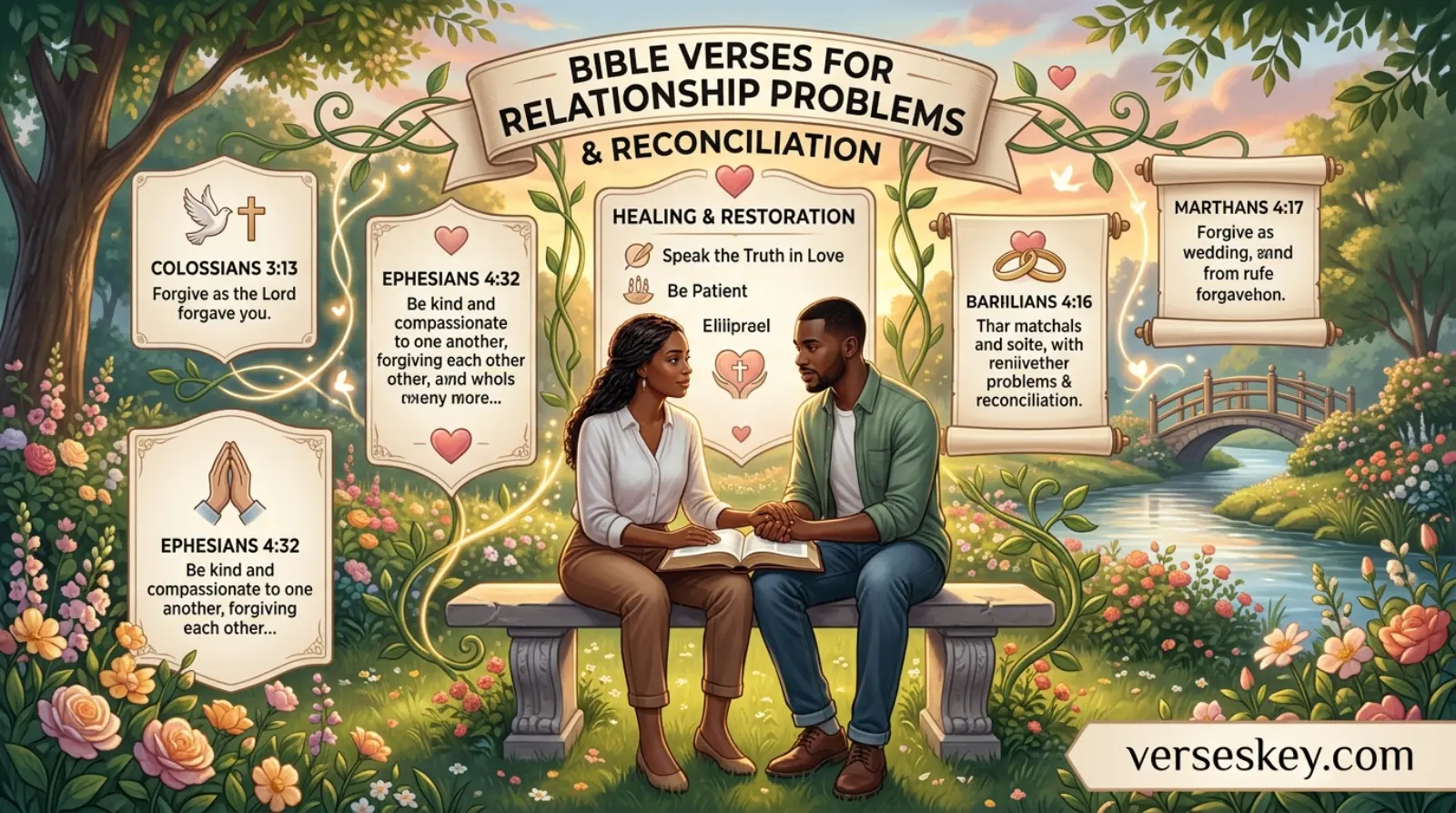
Loving Bible Verses on God’s True Love help you understand divine compassion and eternal faithfulness.
Our platform offers carefully curated EEAT-focused verses rooted in trusted biblical teachings and interpretations.
You can easily copy verses and share them instantly on WhatsApp with friends and family.
Choose from uplifting, comforting, or deeply spiritual messages for every faith-based moment.
Discover meaningful scripture to strengthen your belief and celebrate God’s unconditional love today.
What does loving bible verses mean in text?
The phrase loving bible verses meaning in text refers to how Bible verses that focus on love are interpreted and used in digital communication. These verses usually come from the Bible. And highlight themes such as unconditional love, kindness, forgiveness, and compassion.
In texting, people often shorten or directly share these verses to:
- Express affection toward someone
- Offer emotional or spiritual support
- Encourage a person going through hard times
- Share faith-based inspiration
For example, verses like “Love is patient, love is kind” (1 Corinthians 13:4) are commonly sent in messages to express deep emotional meaning.
Full meaning of loving Bible verses in texting
In simple terms, loving Bible verses are scripture passages that focus on love in its purest form—God’s love, human love, and compassionate living. When used in text messages, they become:
- Emotional messages: Showing care and affection
- Spiritual reminders: Encouraging faith and hope
- Comforting words: Helping someone feel supported
- Inspirational notes: Motivating positive thinking
So, in texting culture, this phrase doesn’t refer to slang but to meaningful religious expressions shared in a modern communication style.
Is it rude, offensive, or neutral?
The use of loving Bible verses in text is completely neutral and positive. It is not offensive or rude in any context. In fact, it is often seen as:
- Respectful
- Encouraging
- Emotionally supportive
- Spiritually uplifting
However, tone matters. If used in the wrong situation (like sarcasm or arguments). It may feel out of place. But generally, these verses are considered kind and thoughtful.
Where is it commonly used?
Loving Bible verses are widely used across different platforms and situations, including:
- WhatsApp messages
- Instagram captions
- Facebook posts
- Personal text messages
- Greeting cards and wishes
- Christian group chats
They are especially popular during:
- Birthdays
- Difficult life situations
- Weddings and anniversaries
- Moments of emotional support
Real-life examples of usage
Here are some natural examples of how loving Bible verses appear in text conversations:
Friendly tone:
“Hey, just wanted to remind you: ‘The Lord is my shepherd; I shall not want.’ Stay blessed!”
Casual tone:
“Thinking of you today ‘Love never fails’ – 1 Corinthians 13:8”
Encouraging tone:
“You’re stronger than you think. ‘Be strong and courageous’ – Joshua 1:9”
Social media caption:
“Spreading love and light today ‘Above all, love each other deeply’”
Support message:
“Praying for you. ‘God is our refuge and strength’ – Psalm 46:1”
Origin and background of loving Bible verses
These verses originate from the Bible, a sacred Christian scripture written over centuries. Many books of the Bible—especially Psalms, Corinthians, and John—contain teachings about love.
Over time, people began sharing these verses in modern formats like:
- Text messages
- Digital posts
- Inspirational quotes
This transformation made ancient wisdom more accessible and relatable in everyday digital communication.

Comparison with similar message styles
| Type of Message | Purpose | Tone | Example |
|---|---|---|---|
| Loving Bible verses | Express faith-based love | Spiritual & emotional | “Love never fails” |
| Romantic messages | Express romantic feelings | Personal & emotional | “I miss you so much” |
| Inspirational quotes | Motivate and uplift | Encouraging | “Keep going, you can do it” |
| General kind messages | Show care | Friendly | “Take care of yourself” |
When to avoid using loving Bible verses
Although they are positive, there are situations where they may not be appropriate:
- During formal business communication
- In unrelated professional discussions
- When the other person does not prefer religious content
- In sensitive arguments where emotions are high
Using them thoughtfully ensures they are received in the right spirit.

Polite alternatives
If you want a similar meaning without religious context, you can use:
- “Stay strong and take care”
- “Sending you positive vibes”
- “You are loved and appreciated”
- “Wishing you peace and happiness”
These alternatives keep the emotional warmth. But remove the spiritual reference.
Why people use loving Bible verses in text
People use these verses because they:
- Express deep emotional connection
- Provide comfort during hard times
- Strengthen relationships
- Share faith in a simple way
- Spread positivity in digital communication
In short, they help people communicate feelings. That are sometimes hard to express in normal words.
Impact of using slang-style Bible verses in communication
Even though this is not slang, its modern usage in texting has a strong impact:
- Makes messages more meaningful
- Builds emotional bonds
- Encourages spiritual reflection
- Promotes kindness in conversations
It also helps bridge traditional scripture with modern communication habits.
Is it safe for social media?
Yes, using loving Bible verses is completely safe for social media. In fact, it is widely appreciated. However:
- Always respect audience beliefs
- Avoid overposting in unrelated contexts
- Keep tone genuine and not forced
When used properly, it increases engagement and spreads positivity.
FAQs
1. What does loving Bible verses mean in text?
It refers to scripture-based messages of love and kindness shared through text messages or social media.
2. Are loving Bible verses only religious?
Yes, they come from the Bible but are often used in both religious and emotional communication.
3. Can I send Bible verses in casual chats?
Yes, they are commonly used in casual, friendly, and supportive conversations.
4. Are loving Bible verses considered slang?
No, they are not slang. They are religious quotes used in modern texting.
5. Where can I use loving Bible verses?
You can use them in texts, social media posts, captions, and personal messages.
6. Do they help in emotional support?
Yes, many people find them comforting and uplifting during difficult times.
Conclusion
The phrase loving bible verses meaning in text reflects how ancient scripture is used in modern digital communication to express love , care, and encouragement. These verses are not slang but meaningful messages that carry emotional and spiritual depth.
When used properly, they can strengthen relationships and spread positivity. The key is to understand context and use them in a way that feels natural and sincere. In today’s fast-paced digital world, loving Bible verses continue to be a powerful way to share faith and kindness through simple text messages.
Discover more posts:
34+ Fasting Bible Verses for Spiritual Strength
35+ Bible Verses for Fear Meaning in Text: Build Faith
41+ Bible Verses About Tithing Meaning in Text Explained

I am Grace Willow passionate about sharing the wisdom and comfort of Scripture. Through my writing, I explore faith, hope, and the timeless lessons of the Bible. I aim to bring God’s Word to life in ways that inspire and guide daily living. My verses and reflections seek to encourage, uplift, and strengthen readers’ faith. For me, writing about Scripture is a way to connect hearts to God’s love.